



What's Happening?
President Trump has indicated that the United States will persist with its military campaign against Iran, emphasizing a strategy of intensified attacks. During a cabinet meeting, he stated that the U.S. aims to pressure Iran into returning to negotiations
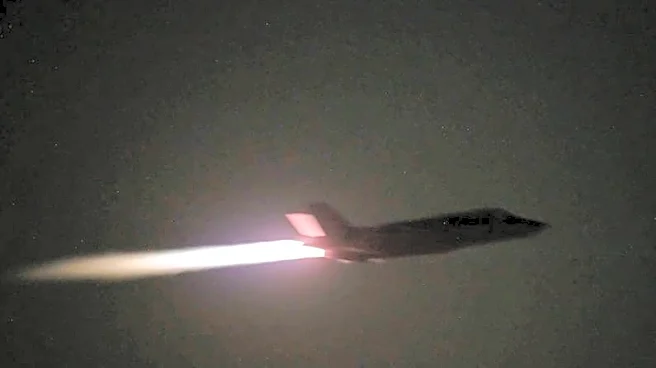
by maintaining a hardline approach. The conflict, which has been ongoing for approximately five months, saw a ceasefire agreement in June that was subsequently broken. President Trump highlighted the significant weakening of Iranian military capabilities, claiming that Iran's navy, air force, and air defense systems have been severely compromised. Despite this, he acknowledged that Iran retains some fighting capability. The U.S. Central Command reported a surge of intense attacks on July 30, although no new airstrikes were confirmed as of July 31. President Trump has also warned of potential future attacks on critical infrastructure in Iran, though these have not yet been executed.
Why It's Important?
The continuation of the U.S. military campaign against Iran has significant implications for international relations and regional stability in the Middle East. The U.S. strategy aims to weaken Iran's military capabilities and pressure Tehran into negotiations, potentially affecting global oil markets and international diplomatic efforts. The conflict could escalate further, impacting U.S. foreign policy and military resources. Additionally, the situation poses risks to regional allies and could influence global perceptions of U.S. military and diplomatic strategies. The ongoing tension underscores the complexities of U.S.-Iran relations and the broader geopolitical landscape in the Middle East.
What's Next?
The U.S. is likely to continue its military pressure on Iran, with potential for further escalations if Iran does not return to the negotiating table. President Trump's administration may face domestic and international scrutiny over the handling of the conflict, particularly if civilian infrastructure in Iran is targeted. The situation could prompt reactions from global powers and international organizations, potentially leading to diplomatic interventions or calls for renewed negotiations. The U.S. military's actions and Iran's responses will be closely monitored by international stakeholders, with potential implications for future U.S. foreign policy decisions.