



What's Happening?
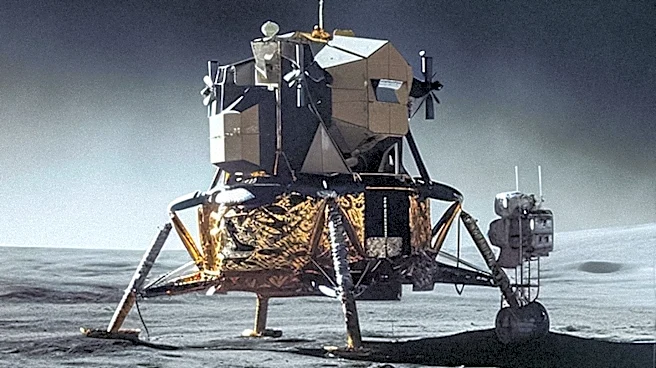
During the Apollo 11 mission, the guidance software developed under Margaret Hamilton's leadership at MIT played a critical role in the successful landing of the lunar module, Eagle, on the Moon. As the module approached the lunar surface, it encountered
a series of 1201 and 1202 program alarms, indicating an overload in the computer's processing capacity. These alarms were part of a design by MIT engineers to prioritize essential tasks, allowing the computer to restart and continue critical landing computations. This system, devised by J. Halcombe 'Hal' Laning, ensured that the lunar module could continue its descent despite the overloads. Hamilton, who directed the Software Engineering Division at MIT's Instrumentation Laboratory, led the team responsible for the onboard flight software, which included error detection and recovery features crucial for the mission's success.
Why It's Important?
The successful handling of the program alarms during Apollo 11's landing highlights the importance of robust software engineering and the foresight of the engineers involved. The ability of the software to prioritize tasks and recover from overloads was essential in preventing an abort of the mission, allowing Neil Armstrong and Buzz Aldrin to safely land on the Moon. This event underscores the critical role of software in space exploration and the need for meticulous planning and testing. Margaret Hamilton's leadership and the contributions of her team at MIT were pivotal in this historic achievement, demonstrating the impact of software engineering on mission-critical operations. The success of Apollo 11 set a precedent for future space missions and highlighted the importance of having reliable systems in place to handle unexpected challenges.
What's Next?
The legacy of the Apollo 11 mission continues to influence modern space exploration. The principles of software engineering and task prioritization developed during this mission are still relevant today, as space agencies and private companies work on new missions to the Moon and beyond. The success of Apollo 11 has inspired further advancements in technology and software development, with ongoing efforts to improve the reliability and efficiency of systems used in space exploration. As NASA and other organizations plan for future lunar missions and potential manned missions to Mars, the lessons learned from Apollo 11 will continue to inform the design and implementation of critical software systems.
Beyond the Headlines
The Apollo 11 mission not only marked a significant achievement in space exploration but also highlighted the contributions of women in STEM fields. Margaret Hamilton's leadership and expertise were instrumental in the mission's success, challenging gender norms and paving the way for future generations of women in technology and engineering. Her work demonstrated the importance of diversity and inclusion in scientific and technical fields, emphasizing that diverse teams can lead to innovative solutions and successful outcomes. The recognition of Hamilton's contributions, including receiving the Presidential Medal of Freedom, serves as a reminder of the impact that individuals can have on groundbreaking achievements.