




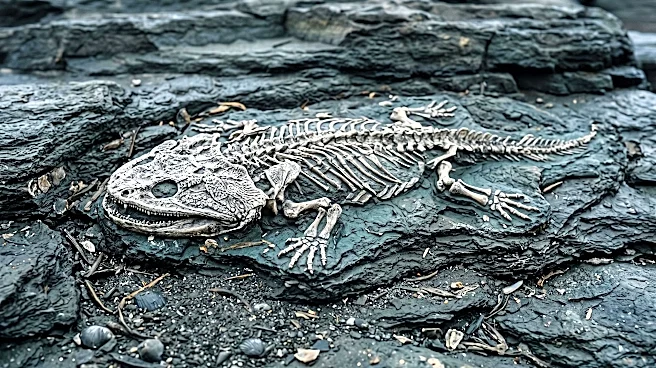


What's Happening?
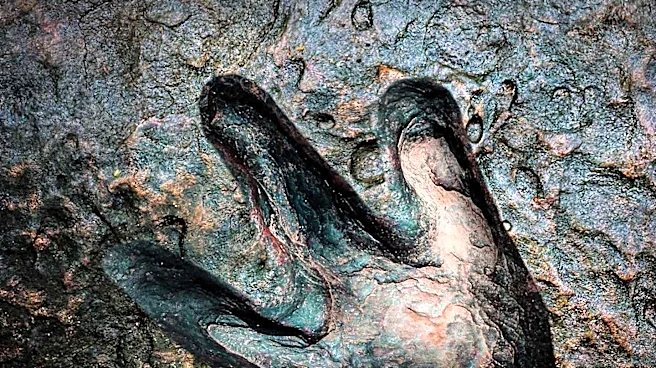
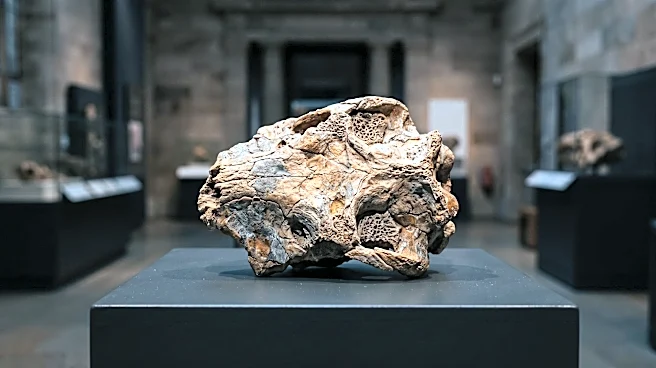
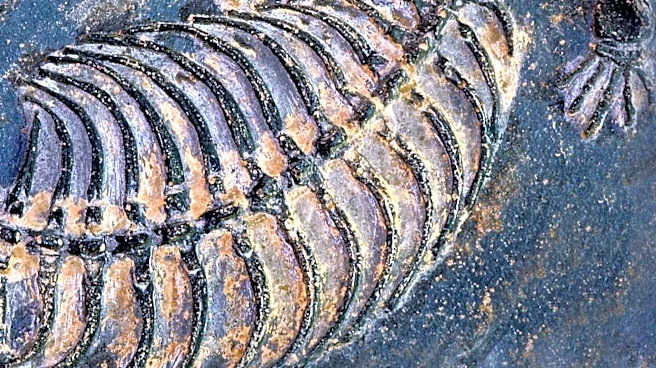
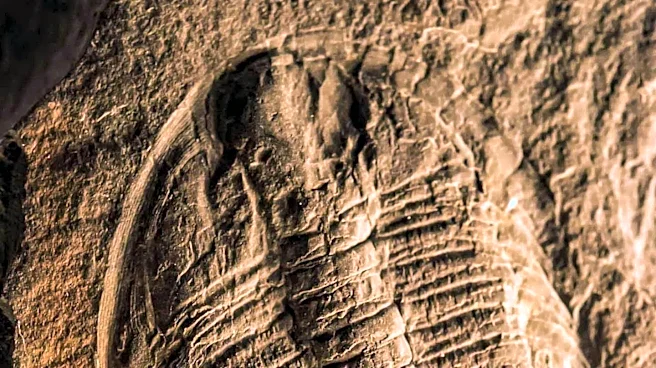
Researchers from McGill University and the Centro de Investigaciones Paleontológicas (CIP) have identified a new pattern of large-scale evolutionary transition in a diverse fossil ecosystem in central Colombia. This discovery, based on research in the Early
Cretaceous Paja Formation, suggests that significant evolutionary changes can occur without mass extinction events. The Paja Biota, an ecologically complex marine community, shows an unusual overlap of older Jurassic groups and newly emerging Cretaceous lineages. Ph.D. graduate Dirley Cortés and professor Hans Larsson propose the concept of a 'biotic inflection,' a period where lineages on the brink of extinction coexist with new, diversifying groups. This phenomenon is believed to have been facilitated by a rare convergence of environmental conditions, including greenhouse temperatures, high sea levels, nutrient-rich coastal waters, and new marine connections between the eastern Pacific and early Atlantic oceans through what is now Colombia. These factors are also recognized as drivers of biodiversity today.
Why It's Important?
This research challenges conventional understanding of evolutionary processes by demonstrating a mechanism for significant biodiversity change that does not rely on mass extinction. The concept of a 'biotic inflection' offers a new model for how life on Earth adapts and diversifies, suggesting that periods of environmental flux can lead to complex ecological shifts rather than solely catastrophic events. Understanding these historical patterns can provide insights into current and future biodiversity changes, especially in the context of ongoing climate change and environmental pressures. The study highlights the importance of specific environmental conditions—such as temperature, sea levels, and nutrient availability—in shaping ecological complexity and evolutionary trajectories. This could inform conservation strategies and predictions about how ecosystems might respond to future environmental shifts, potentially revealing new ways to preserve biodiversity.
What's Next?
The research team plans to conduct additional fossil sampling, more precise dating, and comparisons with deposits in other parts of the world. These steps are crucial to determine how widespread the 'biotic inflection' pattern was throughout Earth's history and to quantify its impacts. Professor Larsson emphasized the need to assess the global reach of this new model of biodiversity change. Future studies will likely focus on identifying similar events in different geological periods and geographical locations to validate the universality of this concept. This ongoing research could lead to a re-evaluation of existing hypotheses about climate-controlled ecosystem change and the origin of various species, potentially influencing how scientists interpret the fossil record and model evolutionary dynamics.
Beyond the Headlines
The discovery of a 'biotic inflection' offers a nuanced perspective on the interplay between environmental factors and evolutionary change. It suggests that periods of environmental stability are not the sole drivers of diversification, and that complex, dynamic conditions can foster unique evolutionary pathways. This challenges the often-catastrophic narrative of evolution, where mass extinctions are seen as the primary catalysts for major shifts. The Paja Biota's exceptional complexity, with a high diversity of apex predators, underscores the intricate relationships within ancient ecosystems. This research also implicitly highlights the ethical considerations of human impact on current environmental conditions, as the same factors that drove ancient biodiversity are now being altered by human activity. Understanding these natural processes can provide a deeper appreciation for the resilience and adaptability of life, while also emphasizing the delicate balance required for ecological complexity.