







What's Happening?
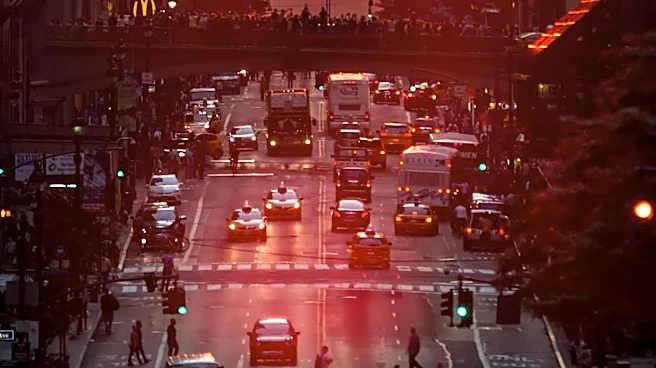
New York City is set to expand its traffic sensor network to improve street safety and design. The Department of Transportation, led by Commissioner Mike Flynn, announced the installation of privacy-protected sensors at 80 additional locations across
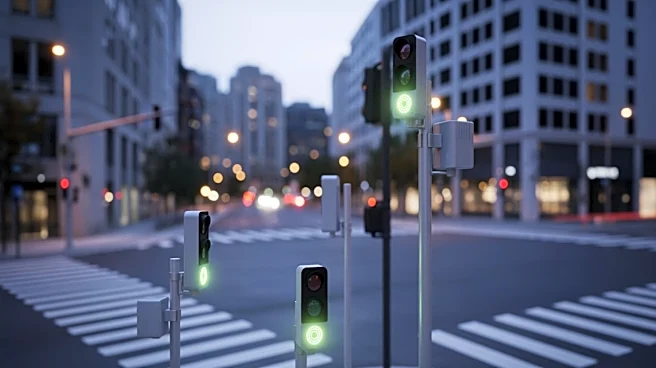
the city, increasing the total to 100. These sensors, first piloted in 2023, will provide continuous, real-time data on pedestrian, cyclist, bus, and vehicle movements. The data will help the city evaluate street safety projects, identify hazardous locations, and improve access to transit and local businesses. The sensors, mounted on DOT infrastructure, will anonymously track street activity, measure speeds, and map user movements through intersections and corridors. The expansion aims to replace traditional manual traffic counts with more accurate and comprehensive data collection.
Why It's Important?
The expansion of the traffic sensor network is significant for urban planning and public safety in New York City. By providing detailed insights into how streets are used, the city can design safer and more efficient transportation systems. This initiative could lead to reduced traffic accidents and improved pedestrian and cyclist safety. Additionally, the data collected will support better allocation of space for different modes of transportation, potentially easing congestion and enhancing the overall quality of urban life. The project, funded by city and grant money, represents a move towards more data-driven decision-making in urban infrastructure development.
What's Next?
As the sensor network expands, the Department of Transportation will likely analyze the data to implement targeted street safety improvements. This could include redesigning intersections, adding mid-block crosswalks, or adjusting traffic signal timings. The success of this initiative may prompt other cities to adopt similar technologies, potentially leading to widespread changes in urban traffic management. Stakeholders such as local businesses, transit authorities, and community groups may engage with the DOT to address specific concerns and priorities based on the data insights.