





What's Happening?
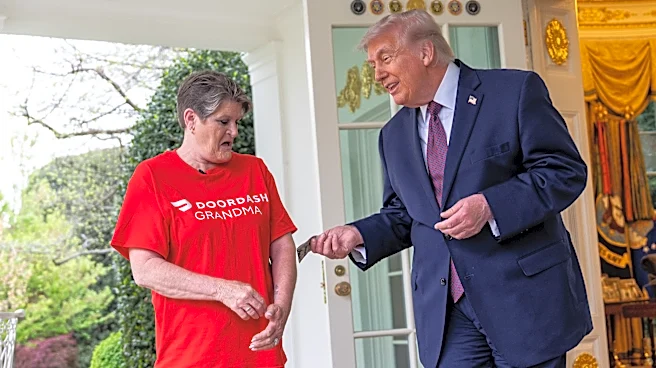
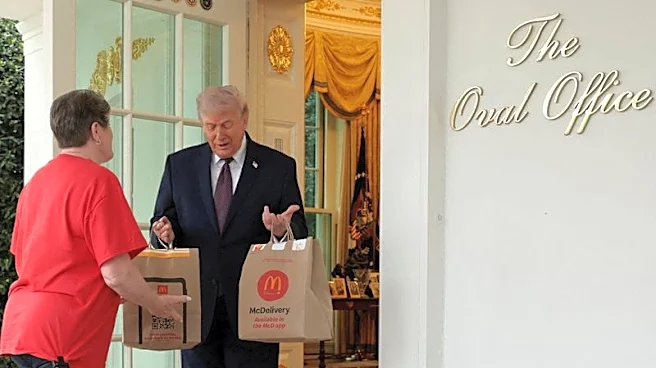
A recent event involving a DoorDash delivery to President Trump at the White House has sparked controversy. Sharon Simmons, the delivery driver, has been dubbed the 'DoorDash grandma' after delivering a McDonald's order to Trump. It was later revealed
that Simmons had previously lobbied for the 'no tax on tips' policy, which was enacted into law a year prior. This revelation has led to questions about the authenticity of the delivery, with DoorDash confirming it was a staged event to celebrate the policy. The 'no tax on tips' policy allows for a temporary deduction of up to $25,000 in tips for eligible workers, but critics argue it offers limited benefits compared to wage increases.
Why It's Important?
The incident highlights ongoing debates about labor policies and economic inequality in the U.S. The 'no tax on tips' policy, while intended to provide financial relief to tipped workers, has been criticized for its limited impact and potential to exacerbate income disparities. Labor advocates argue that such policies do not address the root issues of low wages and lack of economic security for workers. The controversy also underscores the role of corporate influence in shaping public policy, as DoorDash's involvement in the event raises questions about the intersection of business interests and government actions.
Beyond the Headlines
The event has broader implications for public perception of labor policies and corporate accountability. It raises ethical questions about the use of publicity stunts to promote policy changes and the transparency of such actions. The focus on a single policy measure, like the 'no tax on tips,' may divert attention from more comprehensive solutions needed to address wage inequality and worker rights. The incident also reflects the challenges faced by low-wage workers in navigating a complex economic landscape, where policy changes can have significant but uneven impacts on their livelihoods.