


What's Happening?
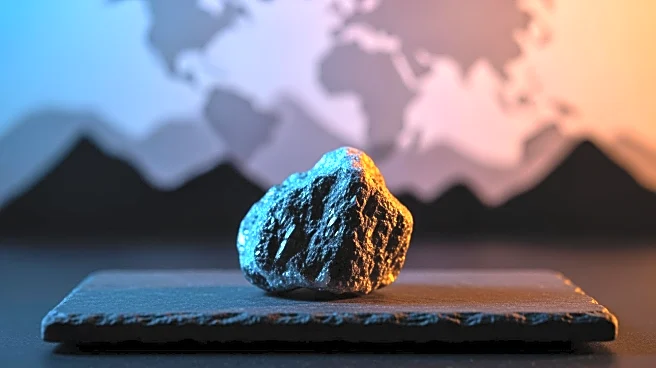
The United States has implemented a new strategy to secure critical minerals from Africa, aiming to compete with China's dominance in the region. This approach involves leveraging offtake deals and state-backed funding to ensure long-term supply chains
for minerals like copper and cobalt, which are essential for energy transition and supply chain resilience. The U.S. is focusing on countries such as Zambia, Guinea, and the Democratic Republic of Congo (DRC), with the DRC alone accounting for a significant portion of the world's cobalt supply. This strategy allows the U.S. to redirect mineral flows to American buyers without directly managing mining operations, thereby reducing political and operational risks.
Why It's Important?
This development is significant as it highlights the strategic importance of securing critical minerals for national security and economic stability. The U.S. aims to reduce its reliance on Chinese-controlled supply chains, which currently dominate the production of these minerals in Africa. By securing these resources, the U.S. can enhance its energy transition efforts and strengthen its supply chain resilience. This move also reflects a broader geopolitical competition between the U.S. and China, as both nations seek to assert influence over Africa's rich mineral resources. The outcome of this competition could have far-reaching implications for global supply chains and the balance of power in the international minerals market.
What's Next?
The U.S. is expected to continue pursuing offtake agreements and other trading arrangements to secure its position in Africa's mineral market. At the upcoming Indaba mining conference in Cape Town, both the U.S. and China are anticipated to seek new commitments from African nations. The U.S. will likely engage with its mineral bloc officials to further align mineral flows with American interests. The success of this strategy will depend on the U.S.'s ability to compete with China's scale and speed in securing these resources. The ongoing competition could lead to shifts in global mineral supply chains and influence future trade and diplomatic relations between the involved countries.