



What's Happening?
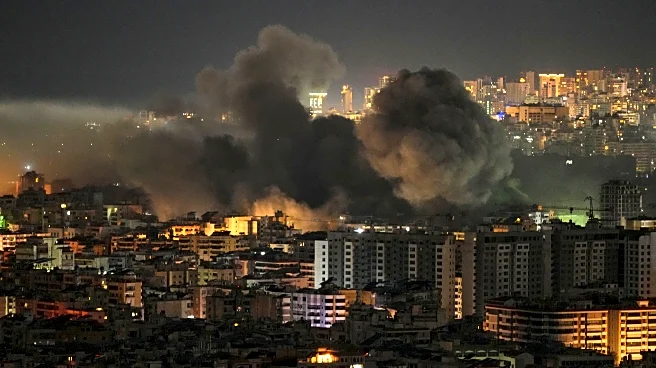
In the ongoing conflict involving Iran, U.S., and Israeli forces, a significant amount of misinformation is being spread through AI-generated videos. A notable instance involved a video purportedly showing an Iranian attack on a skyscraper in Bahrain,
which was later identified as fake. This video, along with others, is part of a broader effort by state actors, particularly those linked to the Iranian government, to amplify their perceived successes in the conflict. The use of artificial intelligence to create realistic yet false videos has become a tool for propaganda, complicating the information landscape. Social media platforms are being used as battlegrounds for these misinformation campaigns, with users often unable to distinguish between real and fabricated content.
Why It's Important?
The proliferation of AI-generated misinformation poses a significant threat to public perception and international relations. By manipulating narratives, state actors can influence public opinion and potentially sway political and military strategies. This development underscores the vulnerability of social media platforms to being exploited for propaganda purposes, highlighting the need for robust verification mechanisms. The spread of false information can lead to misinformed decisions by governments and individuals, potentially escalating conflicts or causing unwarranted panic. The situation also raises concerns about the ethical use of AI in media and the responsibility of platforms to manage content effectively.
What's Next?
Social media platforms are beginning to take action against the spread of AI-generated misinformation. For instance, X, a social media platform, has announced that it will suspend users who post AI-generated content from armed conflicts without proper disclosure. This move is part of a broader effort to curb the influence of misinformation. However, the challenge remains significant, as state actors continue to refine their techniques. The international community may need to develop new policies and technologies to detect and counteract such misinformation effectively. Additionally, public awareness campaigns could be crucial in educating users about the potential for misinformation in digital spaces.
Beyond the Headlines
The use of AI in creating misinformation highlights a broader ethical dilemma regarding the role of technology in society. As AI becomes more sophisticated, the potential for its misuse increases, raising questions about regulation and accountability. The situation also reflects a shift in warfare tactics, where digital misinformation campaigns are becoming as critical as physical military operations. This evolution necessitates a reevaluation of how conflicts are understood and addressed in the modern era. Furthermore, the reliance on AI-generated content by state actors could lead to a loss of trust in digital media, affecting how information is consumed and shared globally.