




What's Happening?
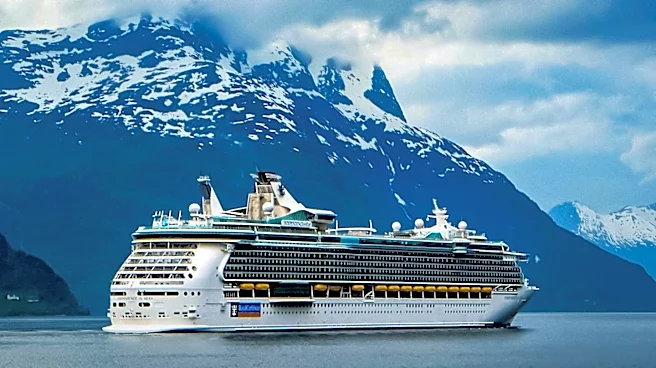
In 2022, Royal Caribbean's Radiance of the Seas struck a mooring structure at the Sitka Sound Cruise Terminal in Alaska while approaching the dock. This incident resulted in an estimated $2.1 million in damage to the pier. The damage subsequently impacted
cruise ship traffic to the terminal for the remainder of the 2022 season. An investigation by the National Transportation Safety Board (NTSB) identified miscommunication and an overreliance on electronic navigation charts as contributing factors. Additionally, the port had extended the pier by 395 feet the previous year but failed to notify the National Oceanic and Atmospheric Administration (NOAA), the agency responsible for updating U.S. coastal nautical charts. Fortunately, no injuries were reported from this incident. This event highlights the challenges and potential costs associated with docking procedures for large cruise vessels.
Why It's Important?
This incident underscores the significant financial and operational risks associated with maritime operations, particularly for the cruise industry and port infrastructure. The $2.1 million in damage to the Sitka Sound Cruise Terminal represents a substantial financial burden, potentially affecting local economies reliant on cruise tourism. The disruption to cruise ship traffic for an entire season can lead to lost revenue for businesses in Sitka that cater to cruise passengers, from tour operators to local shops. The NTSB's findings regarding miscommunication and overreliance on electronic navigation charts point to critical safety and procedural gaps that could have broader implications for maritime safety regulations and training across the U.S. The failure to update NOAA on pier extensions also highlights a systemic issue in information sharing that could compromise navigational accuracy and safety in other U.S. ports. This event serves as a reminder of the complex interplay between human factors, technology, and regulatory compliance in preventing costly maritime accidents.
What's Next?
Following the NTSB's investigation, it is expected that Royal Caribbean and the Sitka Sound Cruise Terminal will review and potentially revise their docking procedures and communication protocols to prevent similar incidents. The findings may also prompt NOAA to reinforce or update its guidelines for ports regarding the reporting of infrastructure changes that could affect navigation charts. Other U.S. ports and cruise lines might also assess their own practices in light of this incident, focusing on improving communication between ship and shore personnel and ensuring the accuracy of navigational data. There could be increased scrutiny on the training of ship pilots and bridge teams concerning electronic navigation systems and their limitations. The incident may also lead to discussions about liability and insurance coverage for such damages, potentially influencing future contractual agreements between cruise lines and port authorities.
Beyond the Headlines
The incident with the Radiance of the Seas touches upon broader themes of technological reliance and human error in complex systems. While electronic navigation charts offer advanced capabilities, an overreliance on them without adequate human oversight or updated information can lead to significant errors. This raises questions about the balance between technological advancement and the need for robust human training and communication in critical operations. Furthermore, the lack of communication between the port and NOAA highlights potential systemic vulnerabilities in regulatory frameworks and inter-agency coordination, which could have far-reaching consequences beyond individual accidents. The incident also subtly points to the environmental impact of such events, even without direct pollution, as damage to infrastructure can disrupt ecosystems and local economies. It serves as a case study for how seemingly minor procedural lapses can escalate into costly and impactful events in the maritime sector.