



What's Happening?
The U.S. Supreme Court has rejected the Trump administration's attempt to implement new mail voting rules for the upcoming 2026 midterm elections. In a three-sentence ruling, the Court upheld lower court decisions that had blocked the U.S. Postal Service
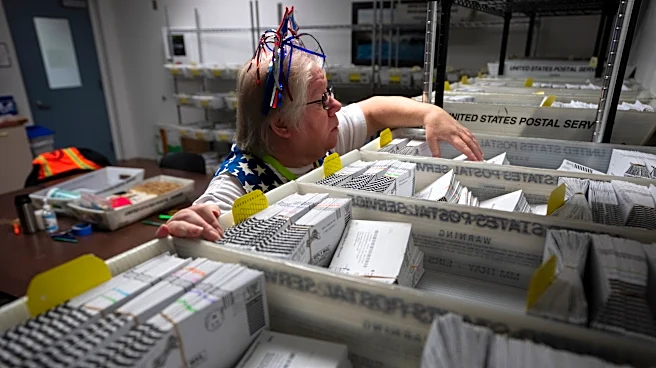
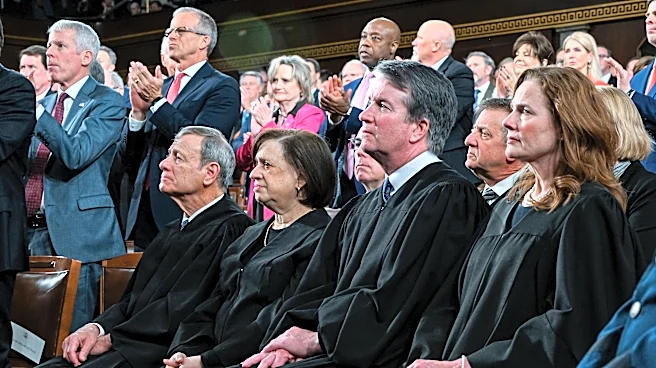
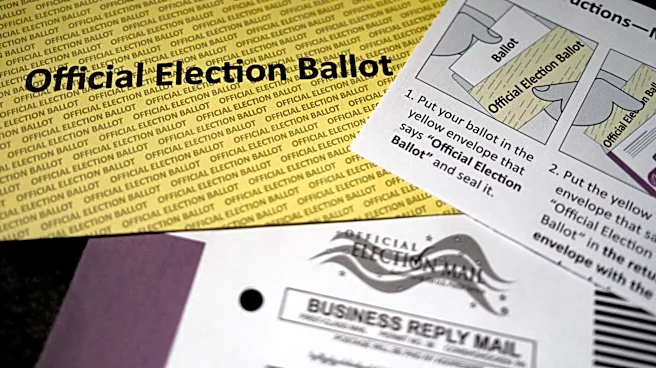
(USPS) rule. This rule, stemming from an executive order by President Trump, would have imposed stringent requirements on states for mail ballot designs, intelligent bar codes, and voter list uploads to a USPS portal. The rule also stipulated that USPS could reject entire batches of ballots for a single mismatch. Critics argued that these requirements were nearly impossible for states to meet on short notice, especially with the midterms already underway, and would have led to the disenfranchisement of millions of voters, including elderly, disabled, military, and rural populations. Justices Samuel Alito and Clarence Thomas dissented, arguing that the government was likely to win on the merits and that the rule would prevent fraud. However, the majority found that the government was unlikely to succeed on the legal question of USPS's authority and that the equitable factors, such as the burden on election administrators and voters, outweighed the government's stated interest.
Why It's Important?
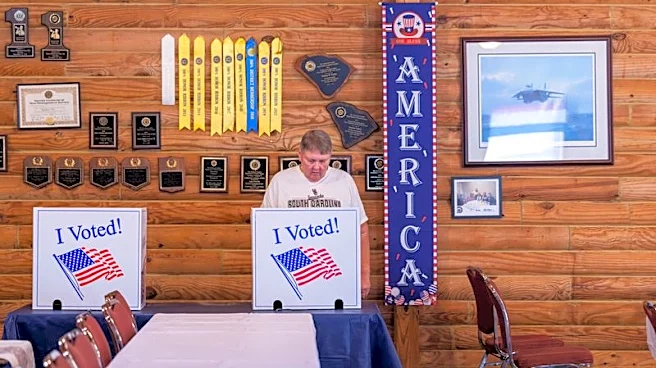
This Supreme Court decision is crucial for safeguarding voting access in the 2026 midterm elections. Had the rule been allowed to proceed, it would have created significant logistical hurdles for state election officials and potentially disenfranchised a large segment of the electorate who rely on mail-in voting. The ruling reinforces the principle that election administration should not be unduly disrupted close to an election, particularly when new rules are introduced without sufficient time for implementation. The Court's rejection of the rule, despite dissents from two conservative justices, signals a broader judicial reluctance to permit actions that could lead to mass voter disenfranchisement. This outcome provides clarity and stability for election administrators and voters, ensuring that established mail-in voting procedures remain in place for the upcoming elections. It also highlights the ongoing tension between efforts to reform election processes and the need to protect fundamental voting rights.
What's Next?
With the Supreme Court's decision, states will continue to operate under their existing mail-in voting procedures for the 2026 midterm elections. This provides certainty for election officials who were facing the prospect of rapidly implementing complex new requirements. While the immediate threat of widespread disenfranchisement due to this specific rule has been averted, the broader debate over mail-in voting regulations and election integrity is likely to persist. Future legislative or executive actions regarding voting procedures could still emerge, potentially leading to new legal challenges. Justice Brett Kavanaugh's concurring opinion, which suggested the rule might fall within USPS's authority but was too close to the election to implement, leaves open the possibility that similar measures could be considered for future elections if introduced with more lead time. Stakeholders, including voting rights organizations and state election bodies, will remain vigilant regarding any new attempts to alter voting access.
Beyond the Headlines
The Supreme Court's ruling extends beyond the immediate impact on the 2026 midterms, touching upon fundamental questions of federal authority, states' rights in election administration, and the balance between election security and voter access. The case underscored the potential for executive orders to significantly alter established electoral processes, raising concerns about the politicization of non-partisan government agencies like the USPS. The dissent by Justices Alito and Thomas, emphasizing the government's interest in preventing fraud, highlights the ideological divisions within the Court regarding election law. This decision may also influence future legal strategies by both proponents and opponents of stricter voting regulations, as it clarifies the Court's current stance on the timing and scope of such changes. Ultimately, the ruling reinforces the judiciary's role as a check on executive power when it impacts the democratic process, particularly in the sensitive area of voting rights.