



What's Happening?
Researchers from Denmark and Australia have discovered a virus within gut bacteria that may be linked to colorectal cancer, one of the most common cancers in developed countries. The study focused on the bacterium Bacteroides fragilis, which is commonly
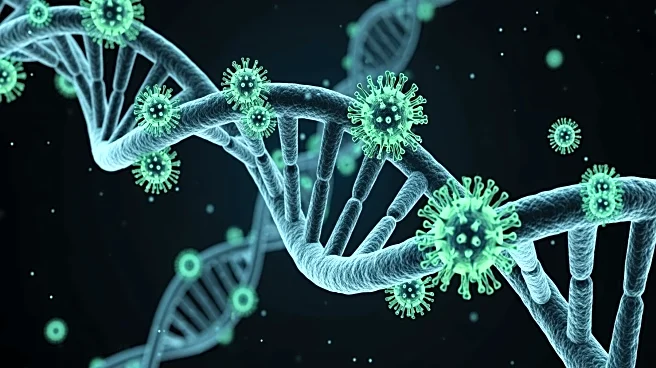
found in healthy individuals but also associated with colorectal cancer. The researchers identified a previously unknown virus, a bacteriophage, that resides within B. fragilis. This virus was found more frequently in individuals with colorectal cancer, suggesting a potential link. The study involved genetic sequencing of gut bacteria from a large Danish population, revealing that patients with colorectal cancer were twice as likely to have the bacteriophage present. However, the researchers have not yet established a direct cause-and-effect relationship between the virus and cancer development.
Why It's Important?
This discovery could have significant implications for understanding and potentially treating colorectal cancer. Since 80% of colorectal cancer risk is attributed to environmental factors, including gut bacteria composition, identifying the role of viruses within these bacteria could lead to new screening methods and treatment targets. The presence of the bacteriophage in cancer patients suggests that it might be used as a biomarker for early detection. This research adds a new dimension to the study of gut microbiomes, emphasizing the importance of viruses in influencing health outcomes. If further studies confirm the virus's role in cancer development, it could lead to innovative approaches in cancer prevention and therapy.
What's Next?
Future research will focus on understanding the interaction between B. fragilis and the bacteriophage, and whether the virus contributes to cancer development or is merely an indicator of other changes in the gut. The researchers aim to explore the potential of using the virus as a screening tool for colorectal cancer, possibly through stool sample analysis. This could lead to earlier detection and improved patient outcomes. Additionally, the study opens avenues for exploring how other viruses within gut bacteria might influence health and disease, potentially leading to broader applications in medical research and treatment.