






What's Happening?
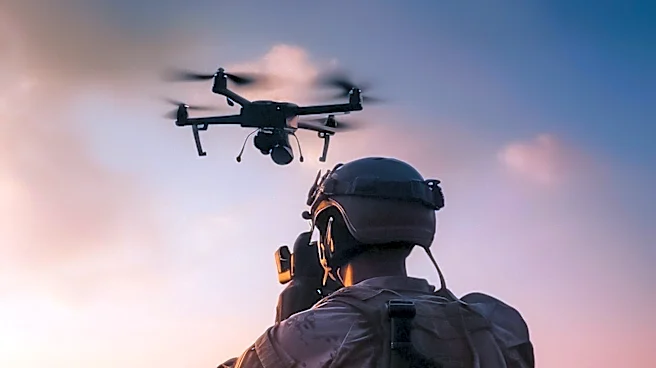
Drone warfare is evolving at an unprecedented pace, with experts warning that armies are struggling to adapt. A recent analysis by a French parliamentary committee indicates that it takes an average of just six weeks for opposing forces to develop countermeasures
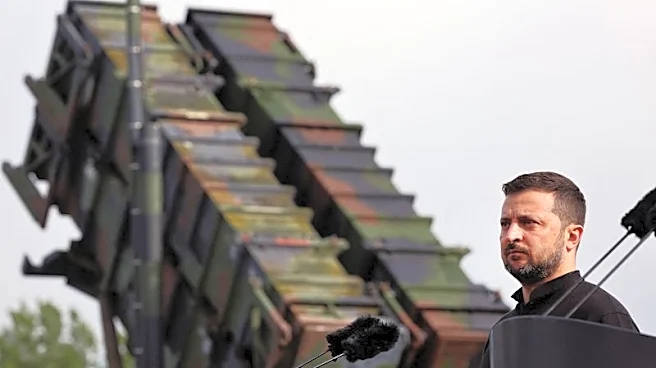
to new battlefield technology in Ukraine. This rapid innovation, driven by drones and robotics, is forcing NATO and its member countries, including the U.S., to rethink military equipment acquisition. Ukrainian forces are at the forefront of this adaptation, deploying autonomous maritime platforms like the Magura MV1 and using computer programming and 3D printers to modify drones directly on the battlefield. Canadian Col. David Brassard, commander of NATO’s multinational brigade in Latvia, stated that his unit is modernizing procurement procedures to become more agile and responsive to this rapidly evolving technology, acknowledging that innovation increasingly comes from soldiers on the front lines.
Why It's Important?
This rapid technological arms race has significant implications for U.S. defense strategy and procurement. The traditional, lengthy cycles of military acquisition are proving inadequate against an adversary that can innovate in weeks. This necessitates a fundamental shift towards more agile, software-centric development and procurement models, emphasizing continuous feedback from the field. For U.S. industries, this means a greater demand for flexible, rapidly deployable technologies and closer collaboration between defense contractors, tech companies, and military research. The increasing use of autonomous systems, including unmanned ground vehicles and drone swarms, also raises critical questions about the future of warfare, the role of human decision-making, and the need for new doctrines and training to effectively integrate these capabilities.
What's Next?
The immediate future will likely see continued efforts by NATO and U.S. forces to accelerate their adaptation to drone warfare. This includes investing in advanced counter-drone systems, developing AI-powered autonomous platforms, and fostering a culture of rapid innovation within military units. Procurement processes will likely become more streamlined, focusing on 'buying a service' that evolves constantly rather than static hardware. International discussions on regulating lethal autonomous weapons systems are also gaining urgency, with a report expected at the seventh review conference of the Convention on Certain Conventional Weapons in November. This could lead to new international norms or regulations governing the development and deployment of these technologies, impacting defense policies and ethical considerations globally.
Beyond the Headlines
The rapid evolution of drone and robotic warfare extends beyond military tactics, touching upon profound ethical and legal dilemmas. The concept of machines autonomously targeting human beings, as warned by the United Nations Secretary-General and the International Committee of the Red Cross, crosses a moral red line. This technological shift challenges existing international humanitarian law, which was not designed for such rapid, autonomous systems. The increasing reliance on AI and robotics in warfare also raises questions about accountability for actions taken by autonomous systems. Furthermore, the democratization of drone technology, with soldiers modifying devices on the battlefield, could lead to unforeseen advancements and challenges in controlling proliferation and ensuring responsible use.