


What's Happening?
In 1950, United Nations forces, under the command of General Douglas MacArthur, withdrew from Pyongyang, the capital of North Korea, and recrossed the 38th parallel. This withdrawal occurred after Chinese forces intervened in the Korean War, inflicting
significant casualties on UN troops. The conflict began on June 25, 1950, when North Korean forces crossed the 38th parallel and attacked South Korea. The UN Security Council responded with Resolution 82, calling for North Korea's withdrawal, and subsequently requested military assistance from member nations. While MacArthur had initially pushed North Korean troops back beyond the 38th parallel and advocated for further advancement into North Korea, President Truman and his advisors had expressed concerns that such an aggressive move could provoke China to enter the war, a concern that ultimately materialized.
Why It's Important?
The withdrawal of UN forces across the 38th parallel marked a critical turning point in the Korean War, demonstrating the significant impact of China's intervention. This event underscored the complexities of international conflicts and the potential for escalation when major powers become involved. For the United States, it highlighted the challenges of fighting a limited war and the strategic dilemmas faced by its leadership regarding military objectives and geopolitical consequences. The decision to retreat rather than push further north reflected a cautious approach to avoid a broader conflict with China, which could have had far-reaching global implications. This historical event continues to inform military and diplomatic strategies concerning the Korean Peninsula and the broader East Asian region, emphasizing the delicate balance of power and the risks of miscalculation.
What's Next?
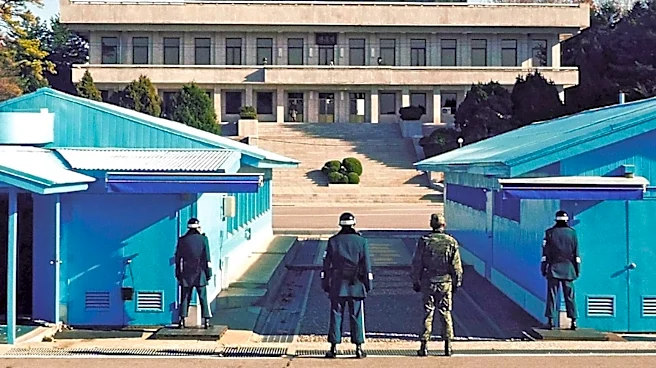
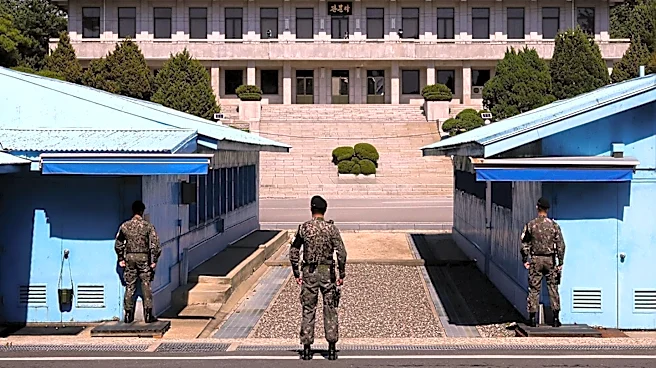
Historically, the intervention of Chinese forces and the subsequent UN withdrawal led to a prolonged and stalemated conflict, eventually resulting in an armistice agreement in 1953 that established the Demilitarized Zone (DMZ) near the 38th parallel. The division of Korea became entrenched, and the geopolitical landscape of East Asia was fundamentally altered. The lessons learned from this period continue to influence contemporary foreign policy and military planning, particularly regarding potential conflicts involving major global powers. The ongoing presence of U.S. forces in South Korea and the continued tensions on the Korean Peninsula are direct legacies of these events, underscoring the enduring importance of understanding the historical context of the Korean War.
Beyond the Headlines
The Korean War, and specifically the Chinese intervention, had profound and lasting implications beyond the immediate battlefield. It solidified the Cold War divisions in Asia, leading to decades of ideological confrontation and proxy conflicts. The conflict also shaped the U.S. military's doctrine and its approach to international interventions, emphasizing the need for clear objectives and an understanding of potential adversaries' red lines. Furthermore, it contributed to the militarization of the Korean Peninsula, creating a heavily fortified border that remains a flashpoint to this day. The human cost of the war, both in terms of lives lost and the enduring division of families, continues to resonate, highlighting the tragic consequences of geopolitical rivalries and the failure of diplomatic solutions.