








What's Happening?
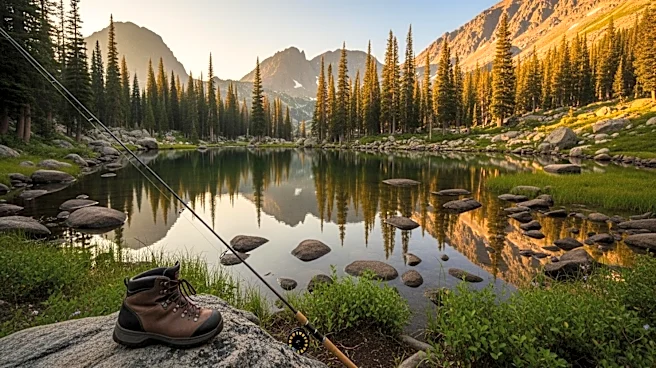
Ryan Busse, a Montana politician, recently reflected on his narrow loss in the Democratic congressional nomination on June 2. Following the defeat, Busse spent time flyfishing with his son, Badge, on public lands in Montana. This experience was described
as a refreshing and accessible escape, highlighting the importance of enjoying natural spaces. Busse draws inspiration from Ed Abbey's 1968 work, 'Desert Solitaire,' which advocates for balancing activism with personal enjoyment of the wilderness. Despite the election loss, Busse remains committed to advocating for public lands and environmental protection, emphasizing the need to enjoy and preserve these spaces.
Why It's Important?
Busse's reflections underscore the ongoing tension between environmental conservation and economic development in Montana. His experience highlights the value of public lands and the need to protect them from privatization and overdevelopment. This narrative resonates with broader national debates on land use, environmental policy, and the role of public lands in American life. Busse's commitment to advocacy, even after an electoral defeat, reflects a broader movement among environmentalists to safeguard natural resources against increasing economic pressures.
What's Next?
Busse plans to continue his advocacy for environmental protection and public land access. He encourages others to engage in similar efforts, drawing on the inspiration of figures like Ed Abbey and Theodore Roosevelt. The political landscape in Montana and beyond may see increased activism focused on preserving public lands and addressing environmental challenges. Busse's future actions and those of like-minded individuals could influence policy discussions and public awareness regarding environmental conservation.
Beyond the Headlines
The story highlights a cultural dimension where personal enjoyment of nature is seen as an act of defiance against wealth disparity and environmental degradation. Busse's narrative suggests a growing cultural movement that values simplicity and connection to nature over material wealth. This perspective may influence future environmental policies and public attitudes towards land conservation.