








What's Happening?
Slovenia has lifted a 2025 ban on the export and transit of weapons and military equipment to Israel, as well as most arms imports from the country. The Defense Ministry announced that the ban was no longer necessary due to existing national and EU regulations
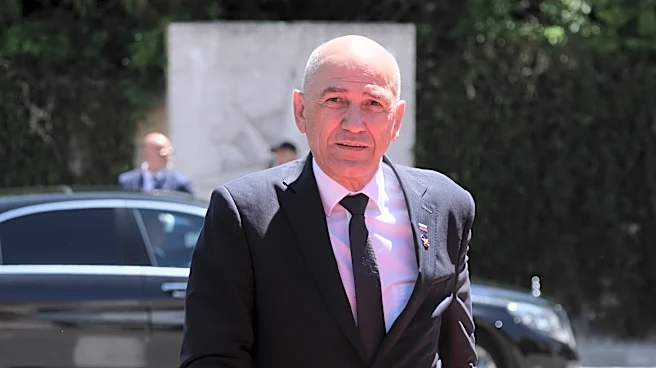
governing arms trade. This decision aligns with the EU Common Position on arms export controls. The ban was initially imposed under former Prime Minister Robert Golob, who had recognized Palestine as a state, leading to strained relations with Israel. The recent change comes under the new center-right government of Prime Minister Janez Jansa, who has expressed strong support for Israel and aims to strengthen bilateral ties.
Why It's Important?
The revocation of the arms trade ban marks a significant shift in Slovenia's foreign policy, potentially enhancing its diplomatic and economic relations with Israel. This move could lead to increased military cooperation and trade between the two nations, benefiting their respective defense industries. It also reflects a broader geopolitical realignment, as Slovenia seeks to distance itself from previous policies that were perceived as hostile towards Israel. The decision may influence other EU countries' policies towards Israel, particularly those with similar bans or restrictions.
What's Next?
With the ban lifted, Slovenia and Israel are likely to explore new opportunities for collaboration in defense and other sectors. The establishment of an Israeli embassy in Slovenia, as announced by Foreign Minister Gideon Sa'ar, could further facilitate diplomatic and economic exchanges. Other EU countries may reassess their positions on arms trade with Israel, potentially leading to a shift in regional dynamics. The international community will watch closely to see how these developments affect Slovenia's relations with other Middle Eastern countries.