







What's Happening?
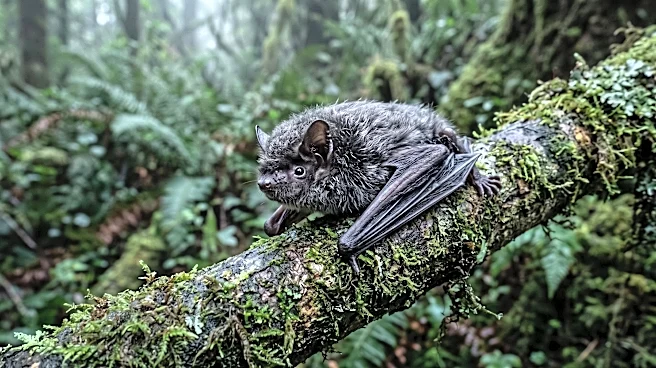
A team of Stony Brook University alumni, including Elise Lauterbur, Tanya Lama, and Bill Thomas, has published research in the journal Nature exploring the molecular underpinnings of bat longevity, virus adaptation, and cancer resistance. Their study
focused on the Myotis genus of bats, known for their extraordinary lifespans relative to their body size and unique immune tolerances. The researchers found that genes associated with virus adaptation, viral interactions, and immunity are often the same genes linked to extreme longevity and cancer resistance. This intersection suggests a pleiotropic relationship, where adaptations for one process, such as viral defense, also contribute to others, like extended lifespan and cancer avoidance. The findings challenge the traditional view of these biological processes as separate, indicating a deep intertwining at the genetic level.
Why It's Important?
This research holds significant implications for human health and medical interventions. By understanding how bats naturally prevent cellular aging, resist cancer, and tolerate viruses, scientists could uncover blueprints for developing new treatments for age-related diseases, cancer, and viral infections in humans. The discovery that DNA damage repair genes are crucial in all three processes—longevity, virus adaptation, and cancer resistance—suggests that therapies targeting one area could have broader benefits across the others. This integrated approach could lead to more holistic and effective medical strategies, moving beyond single-target treatments. Furthermore, the study emphasizes the value of understanding the natural history of unique species, as insights from bats could provide answers to complex human health challenges, especially as environmental changes continue to impact ecosystems.
What's Next?
The findings from this study are expected to stimulate further research into the specific genetic mechanisms that link longevity, virus adaptation, and cancer resistance in bats. Future work may involve detailed functional studies of the identified DNA damage repair genes and their pathways to understand how they confer such robust protection. This could lead to the development of novel pharmaceutical targets or gene therapies aimed at mimicking these natural adaptations in humans. The research also highlights the importance of continued funding for basic scientific inquiry into diverse species, as unexpected discoveries from the natural world can yield profound benefits for human health. Collaboration between geneticists, evolutionary biologists, and medical researchers will be crucial in translating these insights from bats into practical applications for human medicine.
Beyond the Headlines
Beyond its immediate medical implications, this research offers a profound shift in our understanding of biological resilience and evolution. The concept of pleiotropy—where a single gene affects multiple seemingly unrelated traits—is powerfully demonstrated, suggesting that life's complex challenges are often met with integrated, multi-functional solutions. This perspective encourages scientists to look for interconnectedness rather than isolated mechanisms when studying disease and aging. Ethically, the potential to significantly extend human lifespan or enhance disease resistance raises questions about societal impacts, resource allocation, and the definition of 'natural' human limits. Culturally, it could reignite public interest in biodiversity and conservation, as unique species like bats may hold keys to humanity's future health and survival, underscoring the interconnectedness of all life on Earth and the critical importance of preserving natural ecosystems.