





What's Happening?
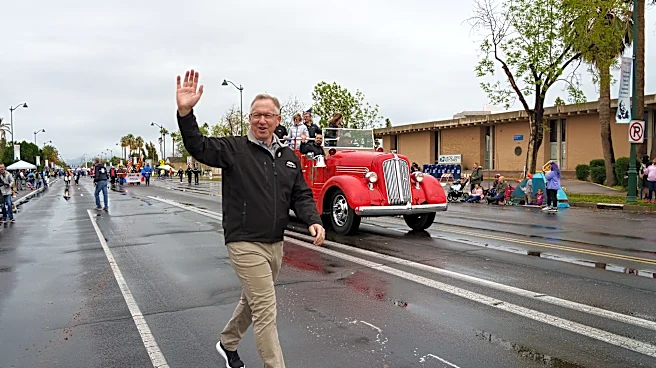
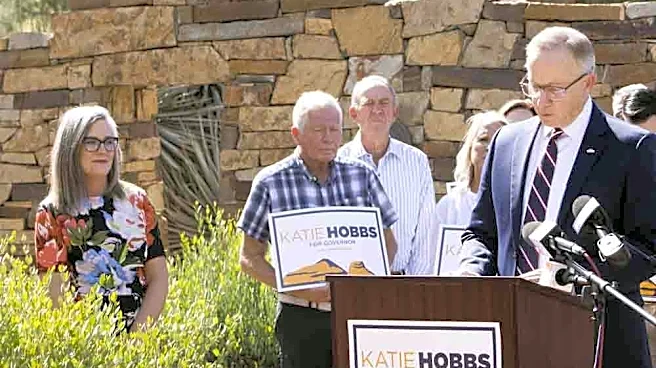
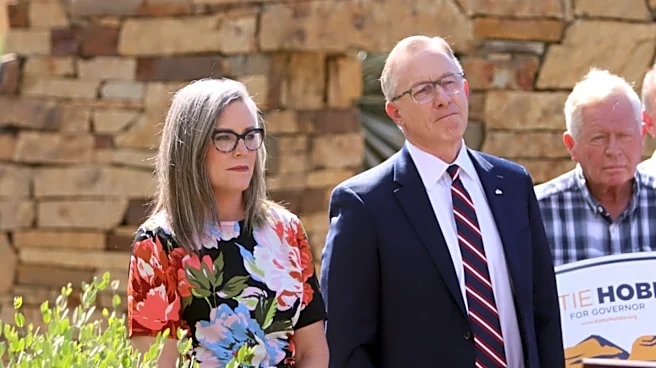
Arizona's Democratic Governor, Katie Hobbs, is reportedly planning to select John Giles, the former Republican mayor of Mesa, as her running mate for lieutenant governor in the upcoming election. This decision, which has not yet been officially confirmed
by Hobbs or Giles, is seen as a strategic move to garner crossover support in a politically divided state. Arizona has experienced shifts in political allegiance, having swung between President Trump and President Biden in recent elections. Hobbs narrowly defeated Trump ally Kari Lake in the 2022 gubernatorial race. This election marks the first time Arizona voters will elect a governor and lieutenant governor as a joint ticket. Meanwhile, Hobbs' Republican opponent, Representative Andy Biggs, has chosen Sine Kerr, a conservative dairy farmer and former lawmaker, as his running mate. Biggs aims to rally Trump loyalists and broaden his appeal.
Why It's Important?
The decision by Governor Hobbs to potentially select a Republican running mate highlights the increasing importance of bipartisan appeal in Arizona's political landscape. By choosing John Giles, a Republican who has supported Democratic candidates in recent years, Hobbs may attract moderate and independent voters who are crucial in a state with fluctuating political loyalties. This move could influence the dynamics of the gubernatorial race, as both Hobbs and Biggs seek to capture the support of voters who previously backed the late Senator John McCain, a prominent figure in Arizona politics. The outcome of this election could have significant implications for the state's political alignment and policy direction.
What's Next?
If confirmed, the selection of John Giles as Hobbs' running mate could prompt reactions from both parties. Democrats may view this as a pragmatic approach to securing a broader voter base, while Republicans might criticize Giles for aligning with a Democratic candidate. The campaign strategies of both Hobbs and Biggs will likely focus on appealing to the state's diverse electorate, emphasizing issues that resonate with both traditional party bases and swing voters. The election will serve as a test of Arizona's political identity and could set a precedent for future bipartisan collaborations in the state.