



What's Happening?
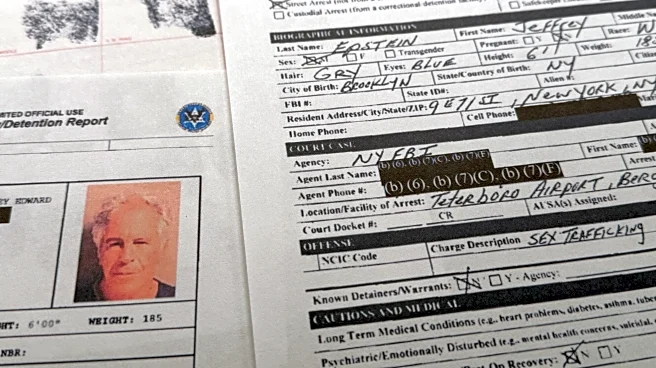
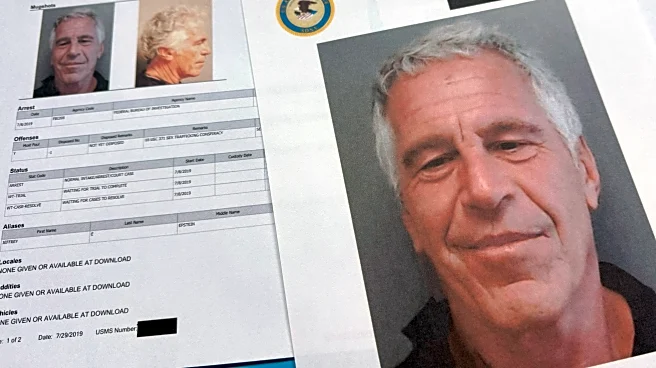
The Justice Department has come under scrutiny for its handling of the release of documents related to Jeffrey Epstein. Lawmakers, including Reps. Ro Khanna and Thomas Massie, have criticized the department for heavily redacting the documents and omitting
information, despite a congressional mandate for full disclosure. The Epstein Files Transparency Act, co-sponsored by Khanna and Massie, aimed to ensure transparency, but the initial release was deemed insufficient. The Justice Department defended its actions, citing the need to protect victims' identities. However, the incomplete release has led to threats of contempt against Attorney General Pam Bondi, with Khanna and Massie considering invoking Congress's inherent contempt powers, which could result in fines or other penalties.
Why It's Important?
The controversy surrounding the release of the Epstein files highlights ongoing tensions between the legislative and executive branches over transparency and accountability. The case has significant implications for public trust in government institutions, particularly in handling sensitive information related to high-profile cases. The potential use of inherent contempt by Congress underscores the seriousness of the issue, as this power has not been exercised since the 1930s. The situation also raises questions about the balance between transparency and privacy, especially concerning victims' rights. The outcome of this dispute could set a precedent for how similar cases are handled in the future, impacting legislative oversight and executive compliance.
What's Next?
As the Justice Department continues to review and release documents, further actions by Congress are anticipated. Lawmakers may proceed with contempt proceedings against Attorney General Bondi if the department fails to meet transparency expectations. The bipartisan nature of the criticism suggests that there could be significant political pressure on the Justice Department to comply fully with the Epstein Files Transparency Act. Additionally, the department's handling of the situation will likely be closely monitored by both the public and advocacy groups, potentially influencing future legislative measures aimed at ensuring government transparency.