




What's Happening?
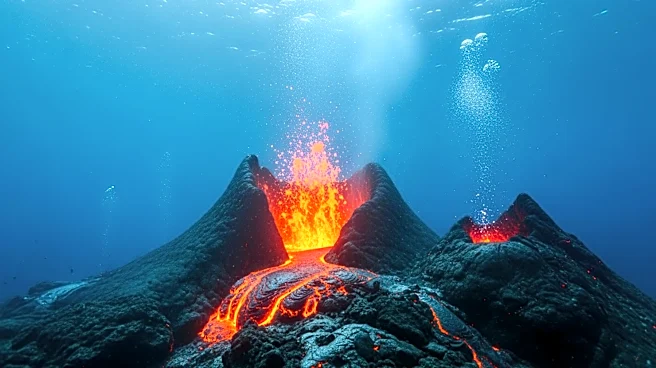
On May 8, 2026, a submarine volcanic eruption was detected in the Bismarck Sea near Papua New Guinea's islands. This eruption has led to the formation of pumice rafts, which have drifted northwest, affecting the coastlines of the Admiralty Islands. The
eruption, believed to be occurring along the Titan Ridge, has resulted in plumes of steam and ash, with discolored water surrounding the site. The pumice rafts have clogged coastlines, particularly impacting Lou Island and Baluan Island, where layers of pumice have cut off access to the water. The larger Manus Island has also been affected, with key waterways choked by volcanic fragments.
Why It's Important?
The eruption and resulting pumice rafts have significant implications for the local communities and ecosystems. The accumulation of pumice disrupts fishing, transportation, and access to essential services. Additionally, the presence of pumice can block sunlight, potentially inhibiting photosynthesis in marine ecosystems, affecting seagrass and coral reefs. The physical damage to reef structures and the potential harm to marine life from ingesting pumice are also concerns. This event highlights the broader environmental and economic challenges posed by natural disasters in vulnerable regions.
What's Next?
Ongoing studies using remote sensing platforms, including Landsat and hyperspectral instruments, are monitoring the situation in the Bismarck Sea. These observations aim to provide insights into the hazards and scientific opportunities presented by submarine eruptions. The data collected will help in understanding the long-term impacts on marine ecosystems and the potential for new land formation. Local communities and researchers will continue to assess the ecological and economic effects, seeking ways to mitigate the disruption caused by the pumice rafts.
Beyond the Headlines
The pumice rafts, while disruptive, also offer unique ecological opportunities. They can serve as floating habitats for marine organisms, facilitating the dispersal of species across vast distances. This aspect of pumice rafts underscores the complex interplay between natural disasters and ecological processes, highlighting the need for comprehensive environmental management strategies in affected regions.