
What's Happening?
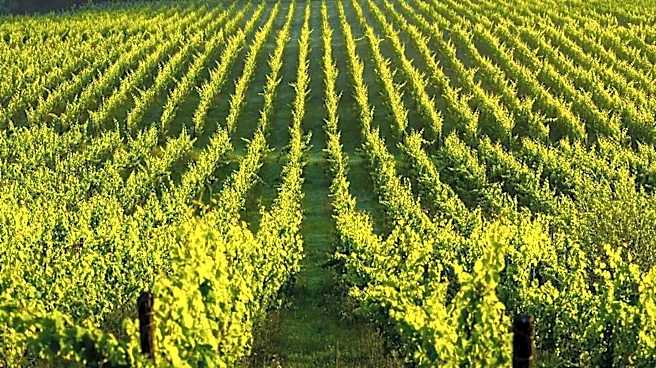
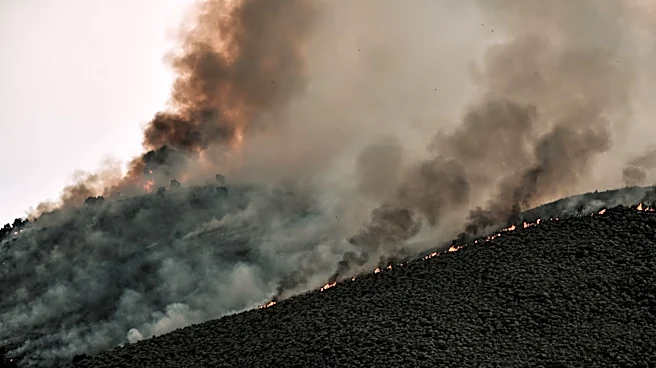
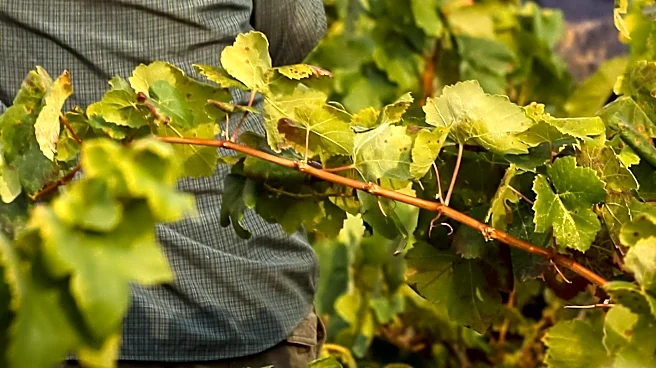
Wineries in British Columbia's Okanagan Valley are facing significant challenges due to wildfire smoke, which poses a threat known as 'smoke taint' to grape production. Smoke taint occurs when grapes are exposed
to wildfire smoke, potentially giving the wine an undesirable smoky flavor. This issue has affected nearly every producer in the region over recent years. Researchers, including Wesley Zandberg from the University of B.C., are working to find solutions, but the unpredictability of smoke taint remains a major concern. The situation is compounded by other challenges such as reduced tourism and labor difficulties due to smoky conditions.
Why It's Important?
The threat of smoke taint represents a significant economic risk for the wine industry in the Okanagan Valley, a key wine-producing region. The inability to predict or fully mitigate smoke taint can lead to substantial financial losses for vineyard owners, as affected grapes may become unsellable. This issue also highlights the broader impact of climate change on agriculture, as increased wildfire activity poses ongoing threats to crop viability and industry sustainability. The economic implications extend beyond the wine industry, affecting tourism and local economies reliant on vineyard-related activities.
Beyond the Headlines
The challenges faced by B.C. wineries due to smoke taint underscore the need for adaptive strategies in agriculture to cope with climate change. The unpredictability of smoke taint also raises questions about the resilience of traditional farming practices and the potential need for innovation in crop protection and management. As researchers continue to seek solutions, the situation may drive advancements in agricultural science and technology, potentially benefiting other regions facing similar challenges.