










What's Happening?
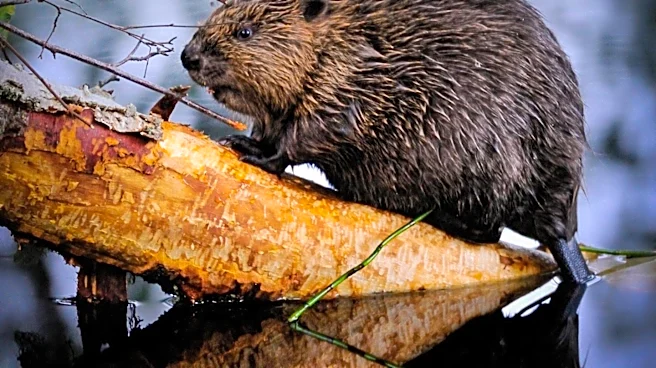
A five-year trial in Cropton Forest, led by Forestry England and the University of Leeds, has demonstrated the positive impact of reintroducing beavers on local ecosystems. Since the release of two Eurasian beavers in 2019, the animals have constructed
six dams, including the largest in England, and expanded their family. The study found that beaver activity has significantly transformed the site, reducing peak water flow, increasing drought tolerance, and enhancing biodiversity. The beaver dams have worked in conjunction with existing flood management structures, compensating for the loss of storage capacity in human-built dams. The trial has shown improvements in plant diversity, vertebrate populations, and overall ecosystem health.
Why It's Important?
The success of the beaver reintroduction trial highlights the potential for using natural solutions to address environmental challenges such as flood management and biodiversity loss. By creating complex wetland habitats, beavers can help mitigate the impacts of climate change, such as increased flooding and droughts. The trial's findings could inform future conservation efforts and policy decisions regarding the use of beavers and other species in ecosystem restoration projects. The positive outcomes also underscore the importance of integrating natural processes into environmental management strategies, which could benefit both wildlife and human communities.
What's Next?
Following the trial's success, Natural England has extended the license for the beaver project until 2029, allowing for continued research and monitoring. This extension will provide further insights into the long-term impacts of beaver activity on ecosystems and inform potential future wild releases. The findings from this trial could influence conservation policies and encourage similar projects in other regions. As the research continues, stakeholders will be looking at how these natural interventions can be scaled and integrated into broader environmental management practices.