






What's Happening?
On November 12, the Port Authority of New York and New Jersey announced its proposed $10.3 billion capital and operating budget for 2027. This comprehensive budget aims to advance significant infrastructure investments across both New York and New Jersey,
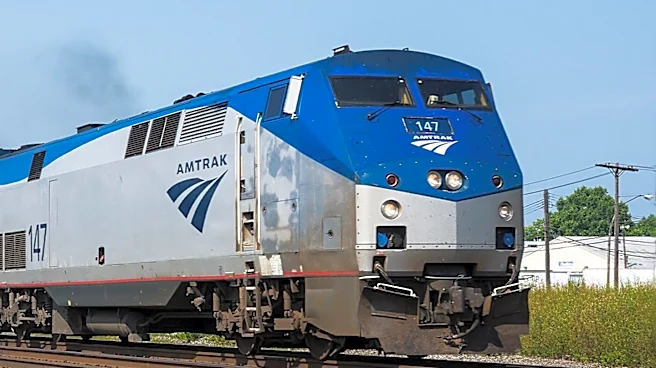
while simultaneously ensuring the safe and reliable operation of the agency's transportation network. The proposed financial plan allocates $4.5 billion for operating expenses, $4 billion for annual capital spending, $1.7 billion for debt service, and $0.1 billion for deferred expenses. A key focus of the budget is to maintain enhanced standards for safety, physical and cybersecurity, cleanliness, and customer service. It also prioritizes the improvement and rebuilding of existing infrastructure to enhance customer experience, accommodate future regional growth, and stimulate economic development. Specific projects include ongoing redevelopment at John F. Kennedy International Airport, construction of a new AirTrain system at Newark Liberty International Airport, and mass transit improvements for LaGuardia Airport. The budget also funds the initial year of operations for a new entry point at the Newark Liberty International Airport Train Station, which will connect to AirTrain Newark, Amtrak, and NJ TRANSIT, significantly improving access for underserved communities in Newark and Elizabeth.
Why It's Important?
This substantial budget is critical for the economic vitality and infrastructural resilience of the New York and New Jersey region. The proposed investments are designed to modernize aging transportation networks, which are essential for daily commutes, commercial shipping, and regional tourism. By allocating nearly $1 billion for facility maintenance, including funds for extreme weather impact repairs and commercial shipping lane dredging, the Port Authority is addressing immediate operational needs and long-term sustainability. The $1.1 billion dedicated to enhancing infrastructure safety and security, including new cybersecurity initiatives, underscores the agency's commitment to protecting critical assets and public safety in an evolving threat landscape. Furthermore, the expansion and modernization of major airports like JFK, Newark Liberty, and LaGuardia are vital for accommodating growing passenger demand and maintaining the region's status as a global travel hub. Improved transit access, particularly for historically underserved neighborhoods in Newark and Elizabeth, aims to foster greater economic equity and opportunity by connecting residents to employment centers and services.
What's Next?
The Port Authority is actively soliciting public input on its proposed 2027 budget. Members of the public are encouraged to submit comments by December 15, 2026, through the Port Authority website. Following this public comment period, the Board of Commissioners plans to seek adoption of the budget, potentially modified based on feedback received, at its December 17, 2026, meeting. Once adopted, the agency will proceed with the planned investments and operational enhancements. This includes the continuation of major construction projects at JFK and Newark airports, the implementation of new security technologies, and the commencement of operations for the new Newark Liberty International Airport Train Station entry point. Additionally, automatic inflation-based adjustments to bridge and tunnel tolls and AirTrain fares are scheduled to take effect in 2027, alongside other previously authorized toll and fare increases from 2024 and 2025. These adjustments are intended to support the agency's self-funded model, which relies on lease payments, third-party fees, tolls, and fares rather than state or city revenue.
Beyond the Headlines
The Port Authority's 2027 budget reflects a broader strategic vision for regional development and resilience. Beyond the immediate infrastructure projects, the significant investment in cybersecurity highlights a growing recognition of digital threats to critical infrastructure, setting a precedent for other public agencies. The focus on improving transit access for underserved communities also points to a commitment to social equity, aiming to bridge economic disparities through enhanced connectivity. This long-term planning, which includes addressing the impacts of extreme weather on legacy facilities, indicates a proactive approach to climate change adaptation within infrastructure management. The agency's self-funded model, relying heavily on user fees, also raises ongoing discussions about the balance between public service provision and financial sustainability, particularly as tolls and fares are set to increase. This budget is not just about concrete and steel; it's about shaping the future economic landscape, social mobility, and environmental adaptability of one of the nation's most vital regions.