

What's Happening?
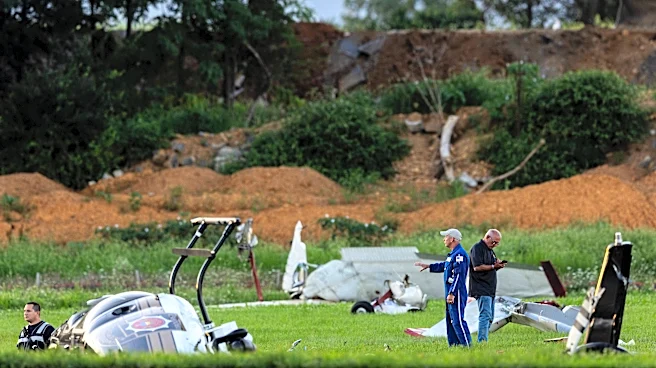
A midair collision occurred near Carlisle Airport in Pennsylvania's Cumberland County on Wednesday night, involving a Pennsylvania State Police (PSP) Bell 407 helicopter and a Cessna 150 airplane. The pilot of the Cessna 150 was killed in the incident.
Two PSP Troopers, Corporal Bryce Corman and Trooper Jason Mills, who were aboard the helicopter, sustained injuries but are expected to survive. Governor Josh Shapiro confirmed the troopers' survival, and Acting Commissioner of the Pennsylvania State Police George L. Bivens provided details on the crash. According to Bivens, the helicopter was conducting a training exercise when the plane veered off course during landing, colliding with the back of the helicopter. The impact caused the plane to break into pieces and the helicopter to roll onto its side. Corporal Corman was able to exit the helicopter and assist Trooper Mills in getting out. One trooper may be released from the hospital soon, while the other will remain for observation. The FAA and National Transportation Safety Board (NTSB) are investigating the crash.
Why It's Important?
This incident highlights the inherent risks associated with aviation, particularly in shared airspace near airports, and the dangers faced by law enforcement personnel during training exercises. The death of the civilian pilot is a tragic loss, and the injuries to the state troopers underscore the hazardous nature of their duties. The involvement of a state police helicopter in a training exercise emphasizes the critical need for rigorous safety protocols and air traffic control coordination to prevent such accidents. The ongoing investigation by the FAA and NTSB is crucial for determining the exact cause of the collision, which could lead to revised aviation safety regulations or training procedures. This event also brings attention to the operational challenges and safety considerations for both civilian and governmental aircraft sharing the same airspace, particularly in busy or complex air traffic environments.
What's Next?
The FAA and NTSB will continue their investigation into the midair collision to determine the precise sequence of events and contributing factors. This investigation will involve analyzing flight data, air traffic control communications, and wreckage examination. The findings could lead to recommendations for improved air traffic management, pilot training, or aircraft safety features. The Pennsylvania State Police will likely conduct an internal review of their helicopter training protocols and operational procedures. The recovery and rehabilitation of Corporal Bryce Corman and Trooper Jason Mills will be a priority. The identity of the deceased pilot will be released once next of kin have been notified. The incident may also prompt broader discussions about airspace management and safety measures at smaller airports that accommodate both civilian and governmental flights.
Beyond the Headlines
This collision underscores the delicate balance required for safe air operations, especially when different types of aircraft with varying operational profiles share the same airspace. The incident could spark a re-evaluation of visual flight rules (VFR) and instrument flight rules (IFR) procedures, particularly around non-towered or less-controlled airfields like Carlisle Airport. It also brings to light the human element in aviation safety, from pilot decision-making to the effectiveness of training exercises. The fact that the helicopter was on a training mission highlights the continuous need for realistic yet safe training environments for emergency services. Furthermore, the incident may prompt a closer look at the integration of governmental and civilian air traffic, and whether current regulations adequately address the complexities of such interactions to prevent future tragedies.