






What's Happening?
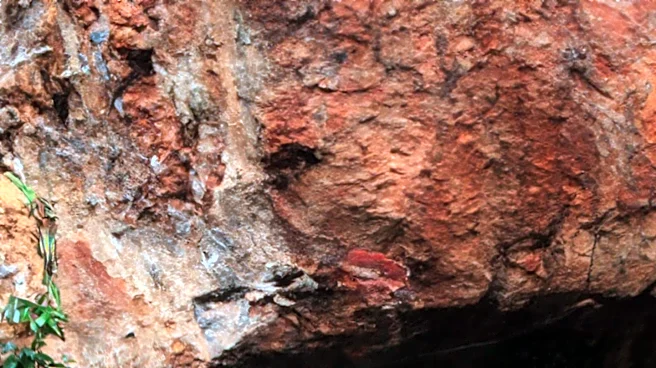
Archaeologists have discovered evidence of ancient rituals in Cloggs Cave, Australia, dating back 25,000 years. The site, located in the homeland of the GunaiKurnai people, contains layers of grass ash, indicating long-standing ceremonial practices. These
rituals, which included magic, healing, and cursing, were performed by burning grasses, a practice linked to cultural traditions documented in the 19th century. The findings, led by Bruno David and GunaiKurnai elder Russell Mullett, provide insight into the continuity of cultural practices over millennia, highlighting the deep historical roots of Indigenous Australian traditions.
Why It's Important?
This discovery is crucial for understanding the cultural heritage and historical continuity of the GunaiKurnai people. It underscores the significance of Indigenous knowledge and practices, which have persisted for thousands of years despite external pressures. The findings contribute to a broader understanding of human history and the role of ritual in societal development. They also emphasize the importance of preserving archaeological sites and respecting Indigenous cultural landscapes, which hold valuable information about past human behaviors and environmental interactions.