
What's Happening?
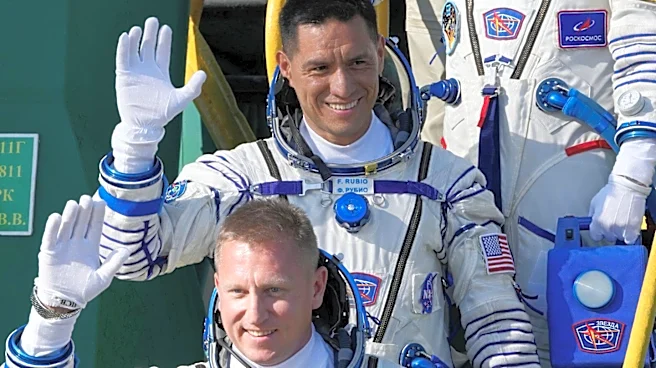
NASA astronaut Chris Williams, along with Russian cosmonauts Sergey Kud-Sverchkov and Sergey Mikaev, returned to Earth after a 241-day mission aboard the International Space Station (ISS). The crew landed
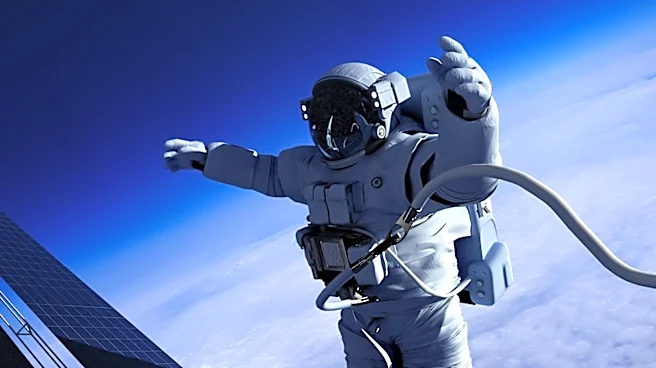
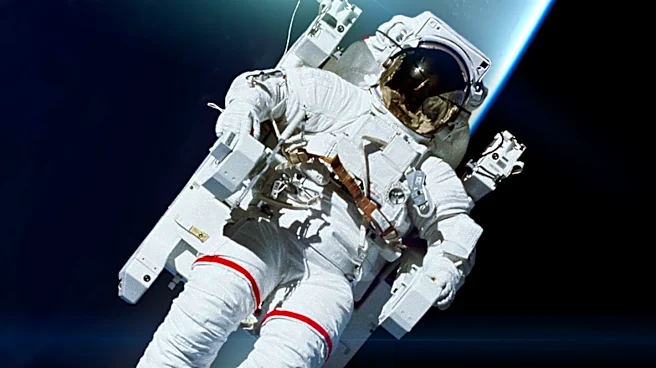
safely in Kazakhstan, marking the end of their long-duration stay in space. During their mission, they conducted various scientific experiments and spacewalks, contributing to ongoing research and maintenance of the ISS. The crew's return involved a precise re-entry and landing procedure, with recovery teams on standby to assist them as they readjusted to Earth's gravity.
Why It's Important?
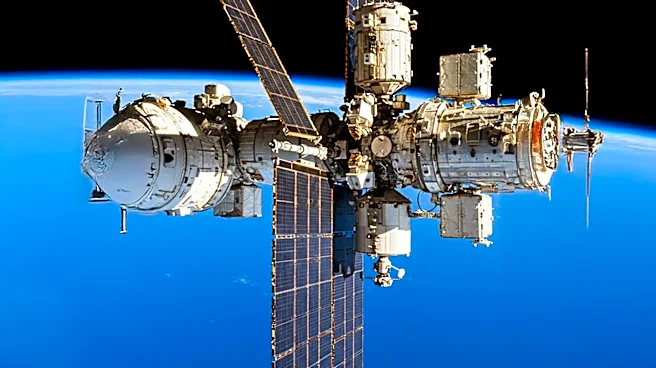
The successful return of the crew highlights the ongoing international collaboration in space exploration, particularly between NASA and Roscosmos. Such missions are crucial for advancing scientific knowledge and technology, as well as preparing for future long-duration spaceflights, including potential missions to the Moon and Mars. The data collected during these missions contribute to our understanding of human physiology in space, which is essential for ensuring the safety and success of future astronauts. Additionally, the mission underscores the importance of maintaining and operating the ISS as a platform for international scientific cooperation.
What's Next?
Following their return, the astronauts will undergo medical evaluations and debriefings to assess their health and gather data on the effects of long-duration spaceflight. The ISS will continue to host international crews, with new missions planned to further scientific research and technological development. NASA and its partners are also preparing for upcoming missions under the Artemis program, which aims to return humans to the Moon and eventually send astronauts to Mars. These efforts will build on the experiences and findings from current and past ISS missions.