



What's Happening?
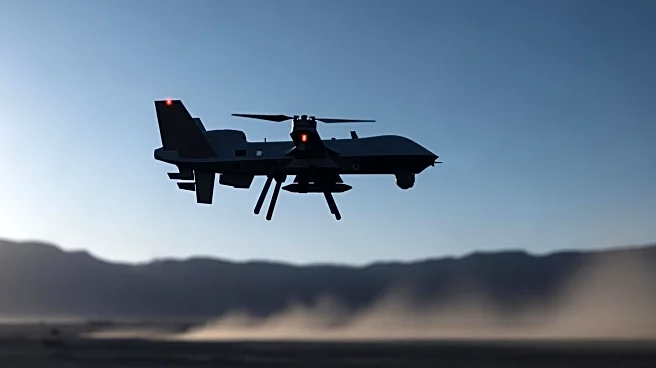
A 26-year-old Israeli Air Force drone operator, identified as Capt. A., successfully carried out a targeted strike against Raad Saad, Hamas's second-in-command and head of operations in its military wing. The operation took place on a Saturday afternoon,
following a routine shift assisting ground forces near Khan Younis. Capt. A. was instructed to fly north, west of Gaza City, to eliminate Saad, who had been tracked by Israeli intelligence for months. The mission was time-sensitive and required precision to minimize collateral damage. Saad was traveling in a Skoda jeep, and the missile fired was highly precise, hitting only those inside the vehicle. Saad and three other senior Hamas members were killed. The operation was completed swiftly, and Capt. A. returned to his previous duties before ending his shift.
Why It's Important?
The elimination of Raad Saad represents a significant blow to Hamas's military leadership, potentially disrupting their operational capabilities in the Gaza Strip. This targeted strike underscores the ongoing conflict and the strategic efforts by Israeli forces to dismantle Hamas's command structure. The precision and success of such operations highlight the advanced capabilities of Israeli intelligence and military technology. The impact on Hamas could lead to a reorganization within their ranks, affecting their ability to coordinate and execute military actions. This development may also influence regional stability and the dynamics of the Israeli-Palestinian conflict, with potential implications for future peace negotiations and security measures.
What's Next?
Following the strike, Hamas may seek to fill the leadership void left by Saad's death, potentially leading to internal power struggles or shifts in strategy. Israeli forces are likely to continue their efforts to target key figures within Hamas, aiming to further weaken their military capabilities. The international community may respond with calls for de-escalation and renewed diplomatic efforts to address the underlying issues of the conflict. Additionally, there could be increased scrutiny on the use of drone technology in military operations, raising ethical and legal questions about targeted killings.
Beyond the Headlines
The use of drones in military operations raises important ethical considerations, particularly regarding the precision and collateral damage associated with such strikes. The normalization of targeted killings as part of military strategy may influence global military practices and policies. Furthermore, the psychological impact on operators, who transition from high-stakes missions to everyday activities, highlights the unique challenges faced by military personnel in modern warfare. This event also reflects the broader geopolitical tensions in the region, with implications for international relations and security policies.