






What's Happening?
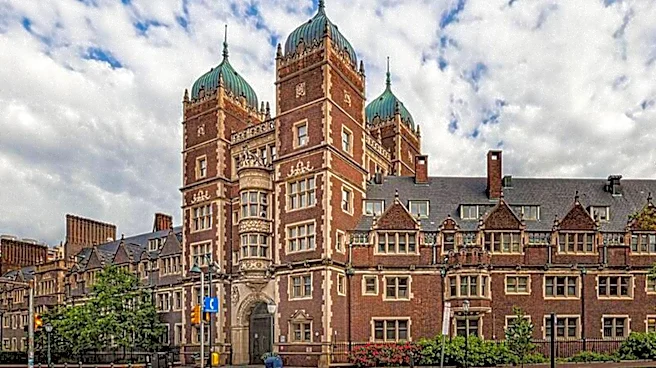
Wesley W. Posvar Hall, the largest academic-use-only building at the University of Pittsburgh, serves as a central hub for various academic and administrative units. Named after Pitt’s 15th chancellor, the hall houses the College of General Studies, the Office
of Veterans Services, the Osher Lifelong Learning Institute, the School of Education, the Graduate School of Public and International Affairs, the University Center for International Studies, and the social sciences departments of the Dietrich School of Arts and Sciences. The building is historically significant as it stands on the former site of Forbes Field, the home of the Pittsburgh Pirates from 1909 to 1970. A preserved home plate from Forbes Field, embedded in glass, is located on the ground floor of Posvar Hall, commemorating the ballpark's legacy, including Babe Ruth's last two home runs. Additionally, one of two surviving Langley Aerodromes, Aerodrome No. 6 from 1896, designed by former Pitt astronomer Samuel Langley, is displayed within the hall.
Why It's Important?
Wesley W. Posvar Hall's dual role as a major academic center and a historical landmark underscores the University of Pittsburgh's commitment to both education and preserving local heritage. Its function as a central location for diverse academic departments and institutes facilitates interdisciplinary collaboration and provides essential resources for a wide range of students and faculty. The preservation of Forbes Field's home plate and the display of the Langley Aerodrome connect the university to significant moments in sports and aviation history, enriching the campus environment and offering unique educational opportunities. This blend of academic utility and historical commemoration enhances the university's identity and its contribution to the cultural landscape of Pittsburgh.
What's Next?
Wesley W. Posvar Hall will continue to serve as a vital academic and administrative center for the University of Pittsburgh. Its ongoing role will involve supporting the educational and research endeavors of its housed departments and institutes, as well as providing services to students and veterans. The historical artifacts within the hall will remain accessible, continuing to educate and inspire visitors about Pittsburgh's past and the university's contributions to innovation. Future developments might include updates to its facilities to accommodate evolving academic needs or new initiatives that further integrate its historical significance with contemporary learning experiences.
Beyond the Headlines
The integration of historical artifacts within a modern academic building like Posvar Hall highlights a broader trend in urban development and institutional planning: the thoughtful incorporation of heritage into new structures. This approach not only preserves important cultural touchstones but also creates a richer, more engaging environment for those who use the space. The presence of the Forbes Field home plate and the Langley Aerodrome serves as a constant reminder of the city's and the university's past achievements, fostering a sense of continuity and pride. Such initiatives can inspire future generations by connecting them directly to the legacies of innovation and community that preceded them, demonstrating how history can be a living part of contemporary life.