


What's Happening?
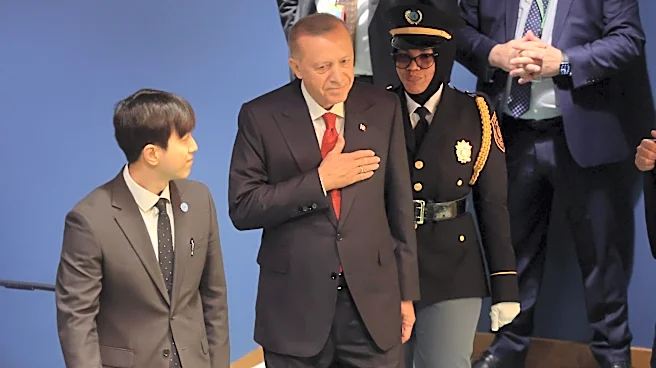
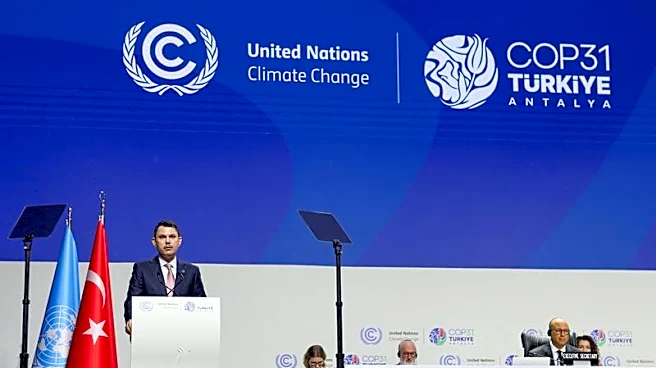
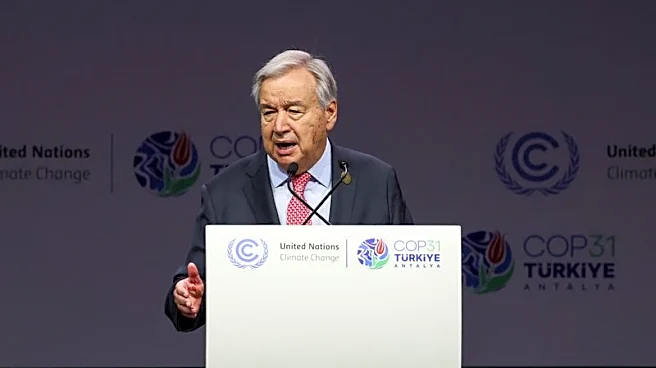
Turkish President Recep Tayyip Erdoğan addressed the COP31 climate summit in Antalya, emphasizing the urgent need for global leaders to translate climate pledges into concrete actions. He outlined Turkey's green development agenda, which includes efforts
to decarbonize various sectors, expand renewable energy, improve energy efficiency, and promote cleaner transportation. A key focus of his speech was the 'Zero Waste Movement,' an initiative championed by his wife, Emine Erdoğan. This movement aims to reduce methane emissions, cut food waste, and foster a circular economy through increased recycling and material reuse. President Erdoğan reported that Turkey's recycling rate has significantly increased from approximately 13% in 2017 to an anticipated 40% by the end of 2025, with about 90 million tonnes of waste recovered and reintegrated into the economy. He also highlighted the United Nations General Assembly's designation of March 30 as International Day of Zero Waste as a significant international achievement.
Why It's Important?
President Erdoğan's address at COP31 underscores a growing international commitment to environmental sustainability and circular economy principles. The 'Zero Waste Movement' in Turkey, with its reported success in increasing recycling rates and recovering substantial amounts of waste, serves as a potential model for other nations grappling with waste management and climate goals. The initiative's focus on reducing methane emissions and food waste directly contributes to mitigating climate change, as these are significant sources of greenhouse gases. The emphasis on a circular economy promotes resource efficiency and reduces reliance on virgin materials, which can have positive economic and environmental impacts globally. The international recognition of March 30 as International Day of Zero Waste further elevates the importance of these efforts on a global scale, encouraging broader adoption and collaboration among countries to tackle waste-related environmental challenges.
What's Next?
Turkey plans to continue its efforts to achieve its zero-waste objectives, with President Erdoğan pledging ongoing commitment until these goals are met. The country has identified 10 priority areas for measurable progress, including clean energy transition, zero waste, food security, and industrial development. Specific targets include increasing the share of electricity use by 50% and cutting waste generation by half. These ambitious goals suggest a sustained focus on environmental policies and investments in green technologies. The international community will likely observe Turkey's progress as a case study for large-scale waste reduction and circular economy implementation. The continued promotion of the International Day of Zero Waste could also lead to increased global awareness and coordinated efforts in waste management and resource efficiency.
Beyond the Headlines
The 'Zero Waste Movement' in Turkey, spearheaded by the First Lady, highlights the potential for high-level political endorsement to drive significant environmental policy changes and public engagement. The initiative's success in recovering 90 million tonnes of waste and substantially increasing recycling rates demonstrates the tangible impact of such programs on national economies and environmental health. This approach also touches upon cultural and ethical dimensions, as President Erdoğan referenced Turkish traditions that emphasize respect for nature and the importance of planting trees. The broader implication is that integrating environmental stewardship with cultural values and strong political will can create a powerful synergy for achieving ambitious climate and sustainability targets, potentially inspiring similar movements in other nations.