




What's Happening?
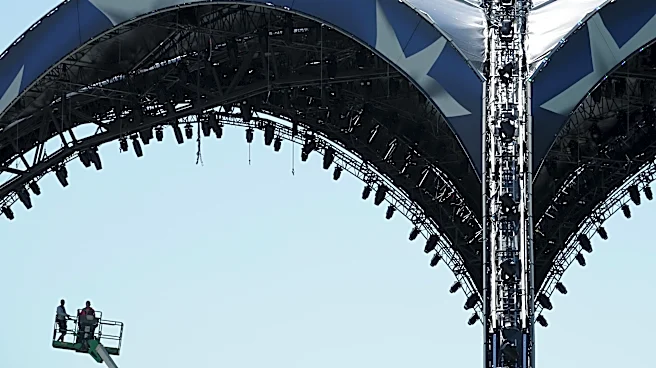
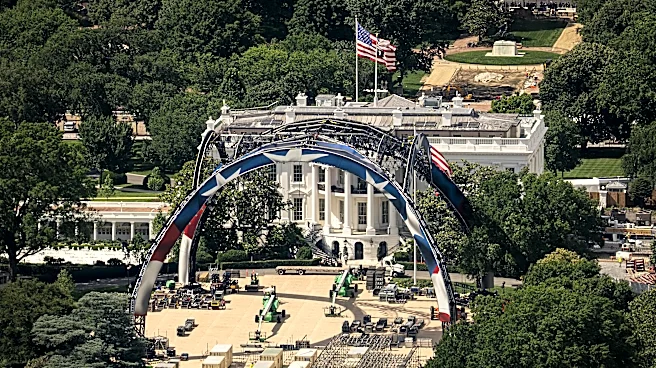
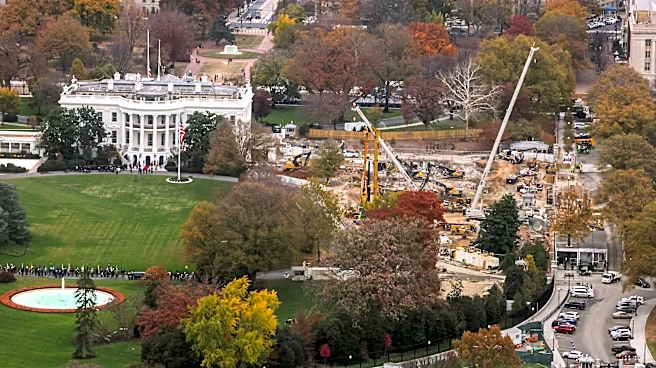
President Donald Trump has initiated several renovation projects at the White House and across Washington, D.C., as part of preparations for the nation's 250th anniversary. These projects include the demolition of the East Wing to construct a new 90,000-square-foot
ballroom, remodeling the Lincoln Memorial Reflecting Pool, and proposing a 250-foot 'Triumphal Arch' near Arlington National Cemetery. The renovations have sparked controversy, with historical conservationists condemning the lack of formal review and congressional approval. The Trump administration defends the projects, citing the need to beautify the city for upcoming celebrations. Legal challenges have arisen, including a lawsuit from the National Trust for Historic Preservation, arguing that congressional approval was necessary for the demolition. Despite these challenges, the administration claims the projects are funded by private donations, not taxpayer dollars.
Why It's Important?
The renovation projects initiated by President Trump have significant implications for historical preservation and public policy. The legal challenges highlight the tension between modernization efforts and the preservation of historical sites. The projects, particularly the construction of the ballroom and the 'Triumphal Arch,' could alter the landscape of Washington, D.C., impacting tourism and local businesses. The controversy also underscores the broader debate over executive authority and the role of congressional oversight in such initiatives. The outcome of these legal battles could set precedents for future administrations regarding the scope of presidential power in altering national landmarks.
What's Next?
The legal proceedings surrounding the White House renovation projects are ongoing, with a hearing scheduled before the U.S. Court of Appeals for the D.C. Circuit. The outcome of this hearing could determine whether the construction projects can proceed. Additionally, the National Capital Planning Commission is set to review the 'Triumphal Arch' proposal, which could influence its approval and funding. Stakeholders, including historical preservation groups and local businesses, are likely to continue voicing their concerns, potentially influencing public opinion and policy decisions. The administration's response to these challenges will be crucial in shaping the future of these projects.
Beyond the Headlines
The renovation projects initiated by President Trump may have deeper implications for the cultural and historical identity of Washington, D.C. The construction of new structures and the alteration of existing landmarks could shift the city's architectural narrative, impacting how history is perceived and celebrated. The legal challenges also raise questions about the balance between modernization and preservation, highlighting the ethical considerations of altering historical sites. These developments could influence future urban planning and conservation efforts, prompting discussions on how to honor history while accommodating contemporary needs.