




What's Happening?
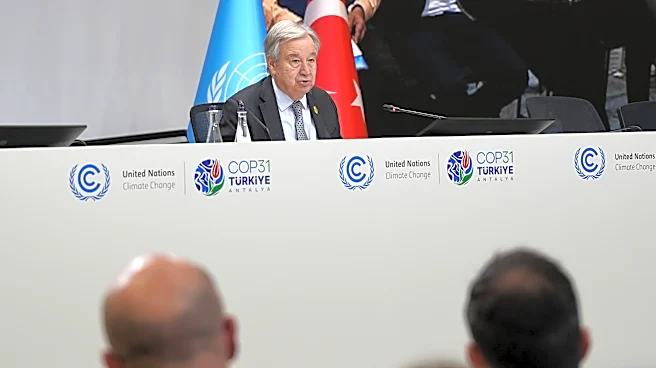
Jagan Chapagain, Secretary General of the International Federation of Red Cross and Red Crescent Societies (IFRC), has called for enhanced connections between early warning systems and timely preparedness for natural disasters. Speaking at a special session
on Early Warning for All at the 31st Conference of the Parties (COP31) to the United Nations Framework Convention on Climate Change (UNFCCC) in Antalya, Chapagain noted significant progress since the initiative began in 2022, with the number of countries having anticipatory action frameworks more than doubling from 35 to 75. He emphasized that while forecasting has improved, the critical challenge now is ensuring these warnings translate into effective preparedness and action. Chapagain highlighted that despite four in five people affected by disasters receiving a warning, one in three could not act on it, revealing a gap between risk information and safety measures. He stressed that early action is crucial for early warnings to be effective, especially as humanitarian resources are increasingly strained.
Why It's Important?
The IFRC's call for stronger links between early warnings and disaster preparedness has significant implications for global humanitarian efforts and the protection of vulnerable communities. The current gap, where many receive warnings but cannot act, underscores a critical failure point in disaster risk reduction strategies. For the U.S., this highlights the need for robust national and local preparedness frameworks that empower communities to respond effectively to warnings, particularly in regions prone to extreme weather events. Investing in anticipatory action, as Chapagain noted, not only saves lives and livelihoods but also reduces the far greater economic costs associated with emergency response and recovery. This approach can lead to more resilient communities, lessen the burden on federal and state disaster relief agencies, and potentially influence U.S. foreign aid and climate adaptation policies by promoting similar strategies internationally.
What's Next?
The IFRC Secretary General's remarks at COP31 signal a continued push for the Early Warnings for All initiative beyond its 2027 target year, viewing it as a milestone rather than a finish line. Future efforts will likely focus on securing sustained political commitment and funding to ensure that all communities, especially the most vulnerable, have the resources and knowledge to act on warnings. This will involve integrating local knowledge with advanced forecasting and decision-making tools. International bodies, national governments, and humanitarian organizations are expected to collaborate on developing practical solutions that bridge the gap between receiving risk information and taking protective steps. The emphasis will be on community participation and technological innovation to strengthen early warning systems, aiming to make them more actionable and effective in reducing disaster risks and building resilience worldwide.
Beyond the Headlines
The IFRC's emphasis on the 'first mile' of early warning systems—community participation—reveals a deeper understanding of disaster preparedness that goes beyond technological solutions. It highlights the ethical imperative to empower those most at risk, recognizing their unique insights into local vulnerabilities and effective solutions. This shift from a top-down approach to one that values local knowledge can foster greater trust and ownership within communities, leading to more sustainable and culturally appropriate preparedness strategies. Furthermore, the call to move beyond responding after disasters to proactive prevention touches upon the long-term societal and economic benefits of resilience-building. It suggests a re-evaluation of how resources are allocated, prioritizing investments in prevention and preparedness over costly post-disaster relief, which could lead to a fundamental change in global disaster management paradigms and humanitarian aid policies.