





What's Happening?
The Israel Police Commissioner, Insp.-Gen. Danny Levy, has ordered the transfer of the investigation into the disappearance of Haymanot Kasau to Lahav 433, a national crime unit. This decision aims to leverage the unit's full capabilities and resources
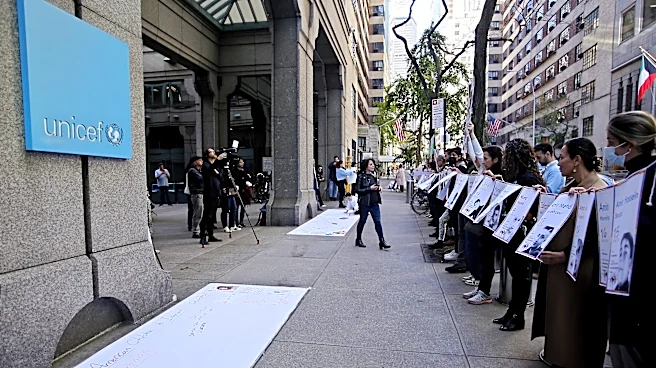
to pursue all possible leads in the case. The announcement comes as protesters, including Haymanot's family, marked 1,000 days since her disappearance with a rally at Hostages Square in Tel Aviv. Haymanot's parents, Tesfaye and Banchi Kassau, have expressed anger and frustration, particularly towards Prime Minister Benjamin Netanyahu, for what they perceive as a lack of action and for not transferring the investigation to the Shin Bet (Israel Security Agency) as they have repeatedly requested. Shira Gvili, whose brother was abducted to the Gaza Strip, also spoke at the rally, sharing her family's anguish and criticizing media reports that offered false hope.
Why It's Important?
The transfer of Haymanot Kasau's case to Lahav 433 signifies a potential escalation in the investigative efforts, bringing national-level resources to a case that has deeply affected a family and garnered public attention. The ongoing protests and the family's direct criticism of Prime Minister Netanyahu highlight significant public dissatisfaction with the handling of missing persons cases, particularly when they involve potential abductions. The comparison drawn by Shira Gvili to her own family's experience with a missing loved one underscores a broader societal concern about the effectiveness and responsiveness of authorities in such sensitive situations. This case could set a precedent for how future high-profile disappearance cases are managed and the level of transparency and urgency applied by government and law enforcement agencies.
What's Next?
The immediate next step will be the integration of the Haymanot Kasau investigation into Lahav 433, which is expected to bring new investigative approaches and resources. The family and campaign headquarters continue to press for the investigation to be transferred to the Shin Bet, indicating that the current move may not fully satisfy their demands. Public pressure, as demonstrated by the 1,000-day protest, is likely to continue, especially if tangible progress is not reported. The case's handling could influence public trust in law enforcement and government responsiveness to citizens' concerns, particularly those from marginalized communities. The outcome of this investigation will be closely watched by the public and could lead to further calls for policy changes regarding missing persons cases.
Beyond the Headlines
The Haymanot Kasau case transcends a typical missing person investigation, touching upon deeper societal issues such as the perceived value of different lives, the efficacy of national security agencies in non-terrorism-related disappearances, and the role of public advocacy in influencing government action. The family's insistence on classifying Haymanot as 'kidnapped' rather than 'missing' reflects a struggle for recognition and a belief that a different classification might unlock more robust resources and a higher national priority. The emotional toll on families, as articulated by both Haymanot's parents and Shira Gvili, highlights the profound psychological impact of prolonged uncertainty and the need for compassionate and effective governmental responses. This case could spark a broader conversation about national protocols for disappearances and the allocation of resources based on perceived threat levels or public profile.