




What's Happening?
Recent observations from the James Webb Space Telescope (JWST) have detected possible chemical signals, such as dimethyl sulfide (DMS), which on Earth is primarily produced by marine microorganisms. This has sparked global excitement and media headlines
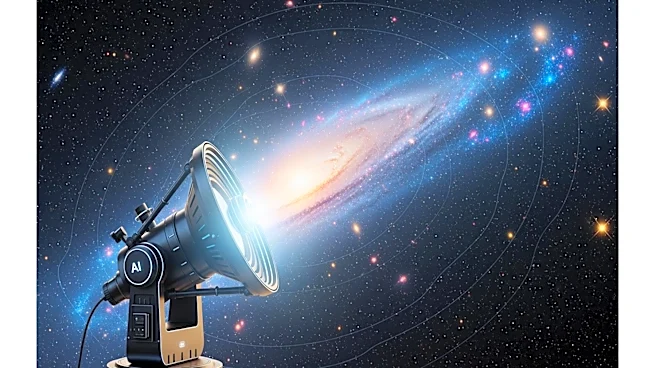
suggesting potential signs of life. However, scientists caution that the data is not yet confirmed, and alternative non-biological explanations exist. More observations are required to verify these findings. Artificial intelligence (AI) plays a crucial role in this research by analyzing space data, scanning exoplanet atmospheres for chemical patterns, and identifying possible biosignatures. Despite these advancements, the search for extraterrestrial life remains in the 'possible' stage, with no confirmed evidence yet.
Why It's Important?
The potential discovery of extraterrestrial life would have profound implications for science, philosophy, and society. It could reshape our understanding of life in the universe and our place within it. The involvement of AI in this research accelerates the pace of discovery by processing vast datasets more efficiently than humans. However, the reliance on AI also increases the risk of false positives, making it crucial to differentiate between possible and confirmed signs of life. The findings could influence future space exploration missions and funding priorities, as well as spark public interest and debate about the existence of life beyond Earth.
What's Next?
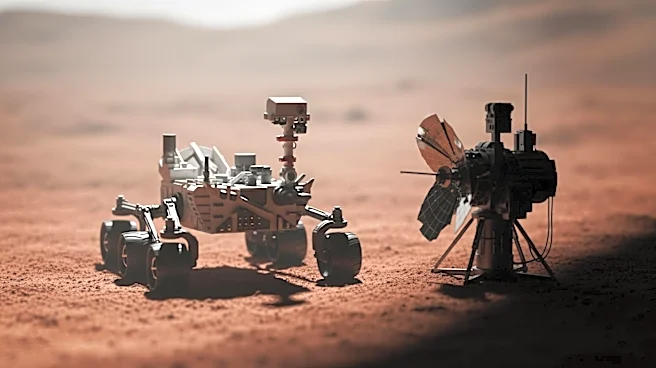
Scientists will continue to gather and analyze data from JWST and other telescopes to verify the potential biosignatures detected. This process involves repeated evidence collection, independent verification, and the elimination of non-biological explanations. Future missions may focus on direct microbial detection, such as Mars sample returns, or the search for intelligent signals with structured communication. The scientific community remains cautious, emphasizing the need for rigorous verification before any conclusions about extraterrestrial life can be drawn.
Beyond the Headlines
The search for life beyond Earth is not just about finding extraterrestrial organisms; it also challenges our understanding of biology and the conditions necessary for life. The discovery of life elsewhere could lead to new insights into the origins and evolution of life on Earth. It also raises ethical and philosophical questions about humanity's responsibility in the universe and how we might interact with other life forms. As AI continues to advance, it will play an increasingly important role in this research, highlighting the need for careful interpretation of AI-generated data.