
What's Happening?
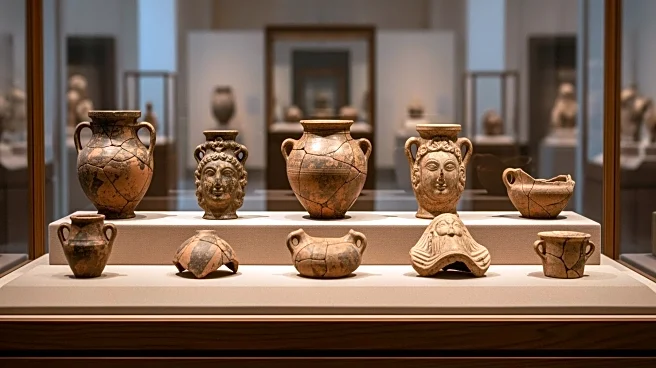
The San Antonio Museum of Art (Sama) has repatriated nine antiquities to Italy, marking a significant cultural exchange. Eight of these artifacts were identified through photographs seized from the convicted
dealer and smuggler Giacomo Medici. The ninth item, a marble head of the Greek god Hermes, was excavated from ancient Roman houses on the Caelian Hill in Rome in the late 19th century and later sold to a San Antonio collector without provenance documents. This repatriation is part of a long-term agreement signed in 2023 between Sama and the Italian Ministry of Culture, aimed at cultural collaboration and exchange. Under this agreement, eight of the repatriated artifacts will remain on display at Sama on loan from Italy, with the possibility of other antiquities being sent to San Antonio in the future.
Why It's Important?
This repatriation underscores the importance of international cooperation in preserving cultural heritage and combating the illicit trafficking of cultural property. By returning these artifacts, the San Antonio Museum of Art is not only adhering to ethical standards but also strengthening cultural ties between the United States and Italy. This move sets a precedent for other institutions holding artifacts of questionable provenance, encouraging transparency and collaboration. The agreement allows for continued cultural exchange, benefiting both countries by sharing Italy's rich cultural heritage with a broader audience, thus enhancing cultural understanding and appreciation.
What's Next?
Following the repatriation, the San Antonio Museum of Art will continue to collaborate with the Italian Ministry of Culture to facilitate the exchange of cultural artifacts. This partnership may lead to more Italian antiquities being displayed in the U.S., enriching the cultural landscape and providing educational opportunities for visitors. The museum's proactive approach in addressing provenance issues may inspire other institutions to review their collections and engage in similar collaborations, potentially leading to more artifacts being returned to their countries of origin.
Beyond the Headlines
The repatriation of these artifacts highlights the ongoing challenges in the art world regarding provenance and the ethical responsibilities of museums. It raises questions about the historical acquisition practices and the role of museums in rectifying past injustices. This development may prompt a broader discussion on the legal and ethical frameworks governing the acquisition and display of cultural artifacts, potentially leading to reforms that ensure greater accountability and respect for cultural heritage.