





What's Happening?
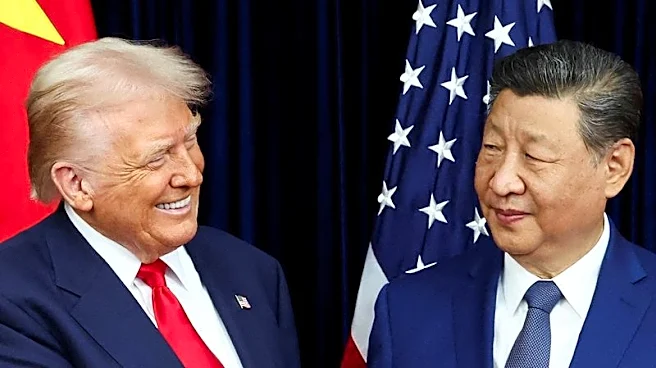
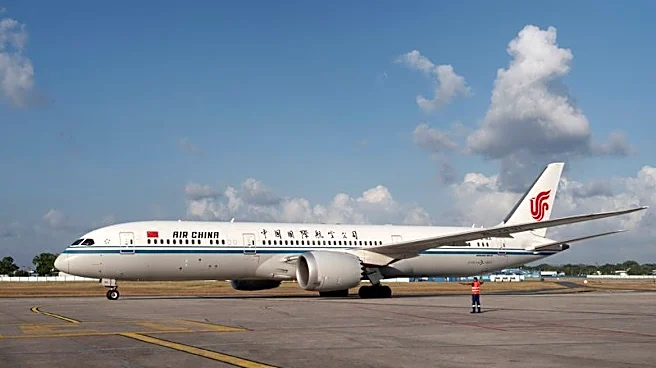
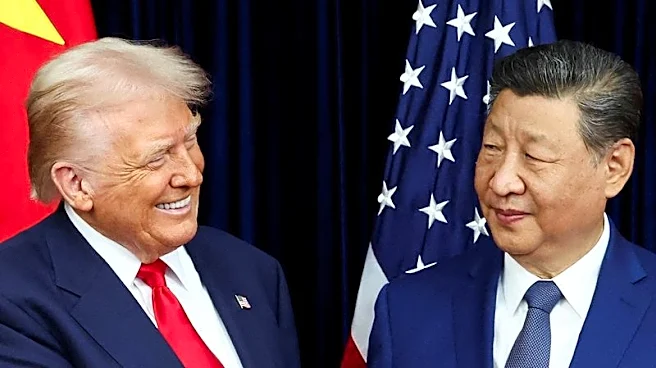
President Donald Trump is set to personally greet Chinese President Xi Jinping at Joint Base Andrews upon his arrival for a state visit next week. This is an unusual gesture, as President Trump typically meets foreign leaders at the White House. The visit will
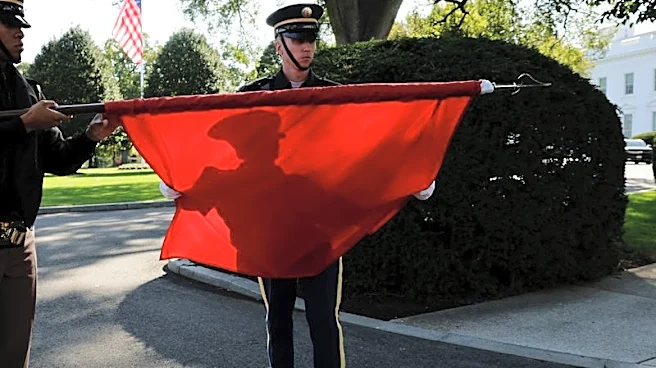
include a formal arrival ceremony, a review of troops in the Rose Garden, and closed-door talks between the two leaders. First Lady Melania Trump and Peng Liyuan, President Xi's wife, will also have a separate engagement. A state dinner will be hosted in the East Room, with notable tech industry executives like Jeff Bezos, Elon Musk, Sundar Pichai, Michael Dell, Jensen Huang, Sam Altman, Jane Fraser, and Tim Cook among the invited guests. Following the main events, President Xi and Peng Liyuan will return to the White House for a private tea and a tour of the National Archives.
Why It's Important?
This state visit is significant as it marks the first such visit by a Chinese leader in over a decade, highlighting the ongoing importance of U.S.-China relations. The unusual airport greeting by President Trump underscores the high-stakes nature of these discussions. The agenda includes critical topics such as artificial intelligence, trade, and China's stockpiles of rare earth minerals. These discussions have the potential to influence global technology development, international trade policies, and the supply chain for essential components used in various industries, from smartphones to fighter jets. The presence of prominent tech leaders at the state dinner further emphasizes the economic and technological dimensions of the bilateral relationship, indicating that the outcomes of these talks could have far-reaching implications for American businesses and technological advancement.
What's Next?
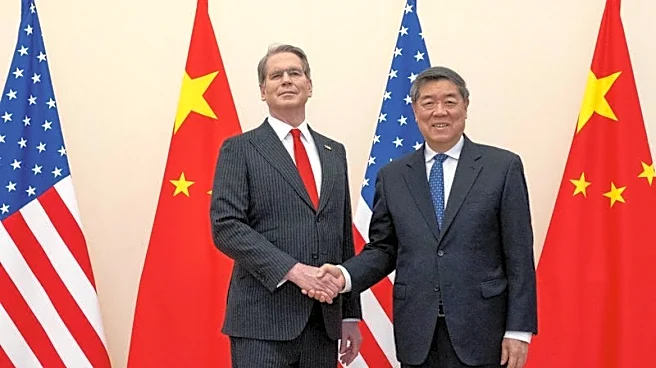
The core of the visit will take place on Thursday with the formal ceremonies and closed-door talks between President Trump and President Xi. Separately, Treasury Secretary Bessent will meet with Chinese Vice Premier He Lifeng over the weekend in New York to discuss economic issues, including artificial intelligence and rare earth minerals. These discussions may continue into Monday at a working level. U.S. officials have indicated that Washington and Beijing might be prepared to ease some tariffs on nonstrategic goods, though a reduction in U.S. export controls on rare earth minerals is less likely. The outcomes of these meetings could lead to new agreements or adjustments in trade policies and technological cooperation between the two nations.
Beyond the Headlines
The emphasis on artificial intelligence and rare earth minerals during this visit points to a deeper strategic competition between the U.S. and China. China's near-monopoly on rare earth minerals has been a tool in past trade negotiations, and its continued control over these resources could impact U.S. national security and technological independence. The discussions on AI regulation also highlight the ethical and societal implications of rapidly advancing technology, as both nations grapple with how to govern and utilize AI responsibly. The visit, therefore, is not just about immediate trade deals but also about shaping the long-term geopolitical and technological landscape, with potential consequences for global innovation, economic stability, and international power dynamics.