







What's Happening?
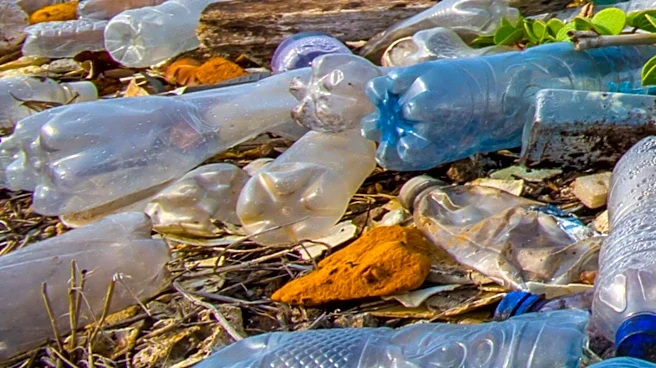
Taiwan is moving beyond climate commitments to achieve measurable results through the implementation of digital product passports, initiatives for source plastic reduction, and increased reuse. The nation is utilizing legislation, industrial collaboration,
and digital innovation to accelerate resource circulation and achieve zero waste. These efforts aim to decrease reliance on virgin resources and reduce carbon emissions. The government has identified eight key areas for its circular economy strategy: food, plastics, textiles, health, construction, electronics, inorganic resources, and circular industries. Currently, 69 publicly listed companies operate within Taiwan's circular economy sector, collectively generating over NT$1 trillion in annual revenue. This demonstrates a significant shift towards a scaled green industry within the country, aligning with global efforts to combat climate change and promote sustainable practices.
Why It's Important?
Taiwan's proactive approach to climate action, particularly its focus on digital product passports and plastic reduction, sets a precedent for other nations seeking to transition to a circular economy. By integrating digital innovation with legislative frameworks, Taiwan is enhancing resource security and supply chain resilience. The substantial revenue generated by its circular economy sector highlights the economic viability and growth potential of green industries. This shift reduces environmental impact and fosters a more sustainable industrial landscape. The emphasis on reducing reliance on virgin resources and lowering carbon burdens directly addresses global climate change concerns, contributing to a more sustainable future and potentially influencing international standards for environmental governance and industrial practices.
What's Next?
Taiwan is expected to continue strengthening its legislative framework and fostering industrial collaboration to further embed circular economy principles across all sectors. The ongoing promotion of digital product passports will likely lead to greater transparency and accountability in product lifecycles, from manufacturing to disposal. Future initiatives may include expanding the scope of plastic reduction and reuse programs, potentially introducing more stringent regulations for industries with high environmental footprints. The government will likely continue to support the growth of circular economy companies through various incentives, aiming to further increase their contribution to the national GDP and reduce overall carbon emissions. International collaborations and knowledge sharing on these successful strategies are also anticipated.
Beyond the Headlines
Taiwan's comprehensive strategy for a circular economy extends beyond immediate environmental benefits, touching upon deeper implications for global trade and technological innovation. The adoption of digital product passports could become a new standard for supply chain transparency, influencing international trade practices and consumer expectations for product origins and environmental impact. This digital integration also positions Taiwan as a leader in green technology and sustainable manufacturing, potentially attracting foreign investment and fostering new technological advancements in resource management. Ethically, this approach emphasizes corporate responsibility and consumer awareness, promoting a shift towards more conscious consumption and production patterns. The long-term success of these initiatives could redefine industrial norms and contribute to a global paradigm shift towards sustainable development.