







What's Happening?
The World Health Organization (WHO) has recommended two malaria vaccines since 2021 and 2023, specifically for young children residing in moderate-to-high malaria transmission areas of Africa. These vaccines are administered as part of national public
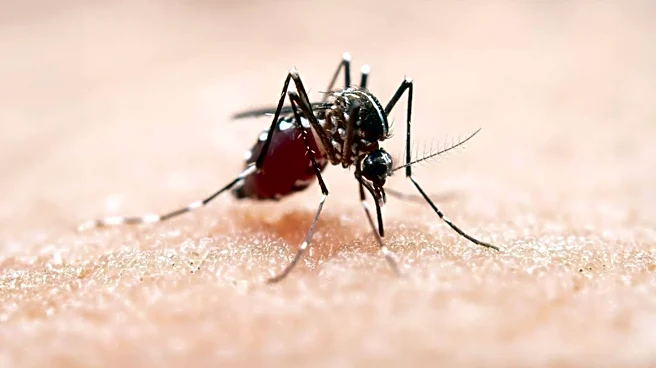
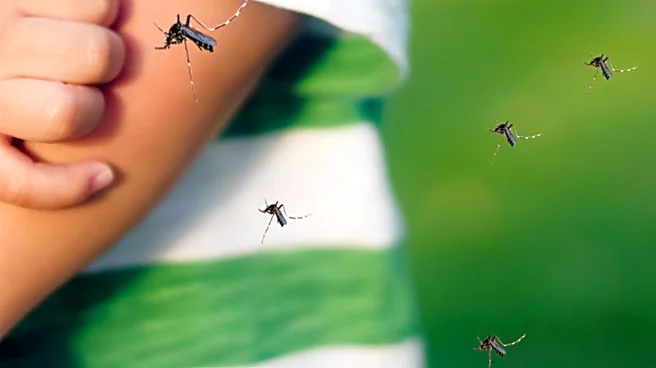
health programs, with the first dose given around five months of age. The goal of these vaccines is to reduce severe malaria episodes in populations constantly exposed to the disease. However, these vaccines are not available or recommended for travelers, including those from the United States, as they were not tested for this purpose and provide partial protection that wanes over time, requiring booster doses suitable for continuous exposure. For travelers, the Centers for Disease Control and Prevention (CDC) and other health bodies continue to recommend prescription antimalarial tablets and strict mosquito-bite avoidance.
Why It's Important?
This development highlights a significant advancement in global health efforts to combat malaria, particularly in the African Region, which accounts for the vast majority of malaria cases and deaths, with children under five being disproportionately affected. The vaccines represent a crucial tool in reducing the burden of malaria in these high-risk populations. For U.S. travelers, it underscores the continued importance of traditional malaria prevention methods. The distinction between public health vaccination programs for endemic regions and individual traveler prophylaxis is critical for understanding effective disease prevention strategies. It also emphasizes that while scientific progress is being made, a universal solution for all populations and travel scenarios is still under development.
What's Next?
Research is ongoing to develop malaria vaccines suitable for adults and short-term travelers, with scientific advancements occurring at an accelerated pace. However, for the foreseeable future, U.S. travelers to malaria-prone areas will continue to rely on prescription antimalarial tablets and diligent mosquito-bite prevention. Health authorities like the CDC and NHS will continue to update their guidance based on evolving resistance patterns and transmission risks. Individuals planning international travel to malaria-endemic regions are advised to consult with a travel health clinician four to six weeks before departure to receive personalized recommendations and prescriptions.
Beyond the Headlines
The introduction of these malaria vaccines for children in Africa represents a long-term shift in global health policy, moving towards a multi-pronged approach that combines vaccination with existing tools like insecticide-treated nets, prompt testing, and treatment. This layered strategy is credited with the decline in malaria deaths since 2000. The challenge of parasite resistance to both insecticides and medicines, coupled with factors like climate change and funding gaps, continues to threaten these gains. The differing needs of residents in endemic areas versus short-term travelers also highlight the complexity of developing and deploying effective disease prevention strategies on a global scale, emphasizing the need for tailored interventions.