




What's Happening?
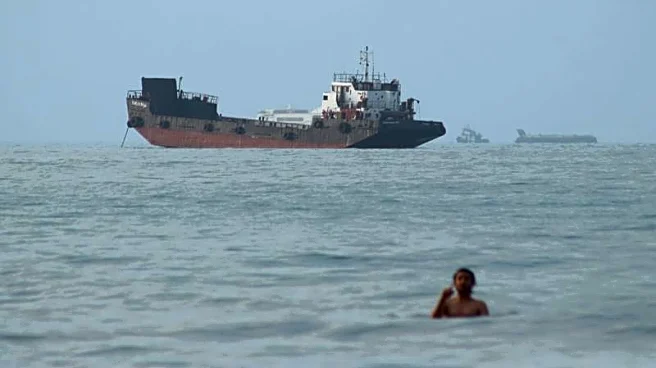
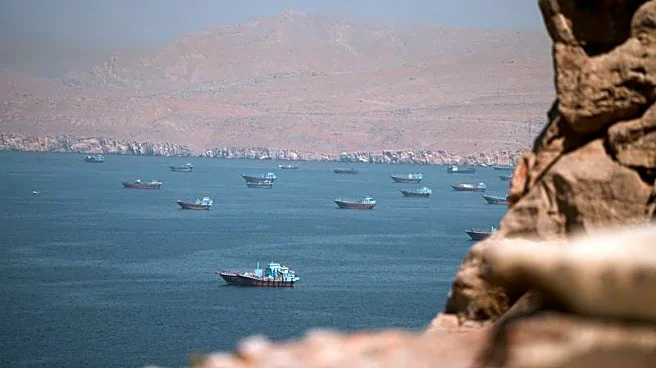
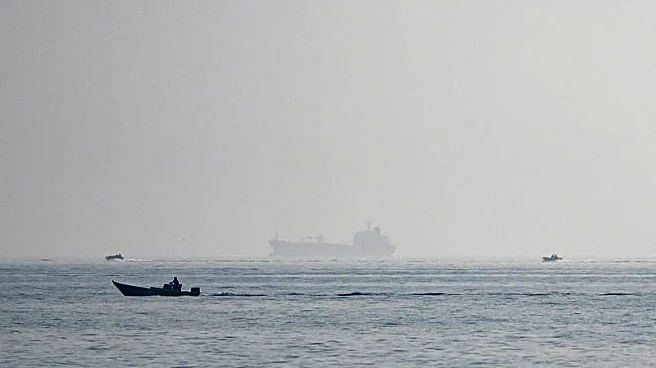
Oman and Iran are reportedly close to reaching an agreement to reopen the Strait of Hormuz for commercial shipping, following a slowdown in hostilities between the U.S. and Iran. The proposed agreement includes a joint regional mechanism to manage the strait,
with voluntary fees for passage. This development comes after Oman sent a delegation to Tehran, coinciding with President Trump's decision to halt U.S. strikes on Iran. The negotiations aim to address shipping concerns without fully resolving the broader U.S.-Iran conflict, with mediators hoping for a temporary agreement to facilitate further diplomatic talks.
Why It's Important?
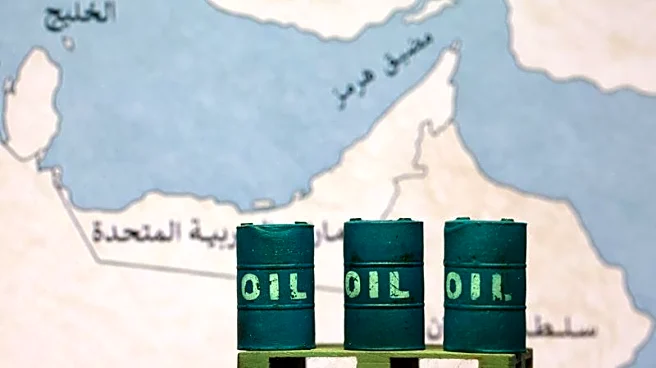
The Strait of Hormuz is a critical chokepoint for global oil shipments, and its reopening could stabilize international energy markets and reduce geopolitical tensions. The agreement between Oman and Iran reflects regional efforts to manage security and economic interests independently of U.S. military actions. However, the U.S. and Oman oppose Iran's proposal to impose compulsory tolls, highlighting ongoing disagreements. The situation underscores the complexity of Middle Eastern diplomacy and the challenges of balancing regional autonomy with international security concerns.
What's Next?
If the agreement is finalized, it could lead to a temporary easing of tensions in the region and provide a framework for more comprehensive negotiations. The U.S. may continue to monitor the situation closely, given its strategic interests in the region. The outcome of the talks could influence future U.S. foreign policy decisions and military strategies in the Middle East. Additionally, the agreement's success or failure may impact regional alliances and the broader geopolitical landscape.