






What's Happening?
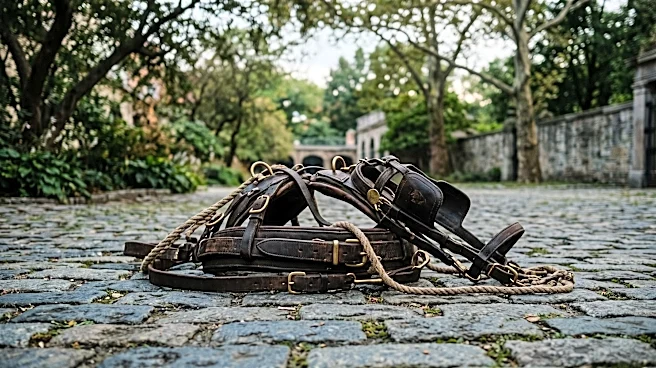
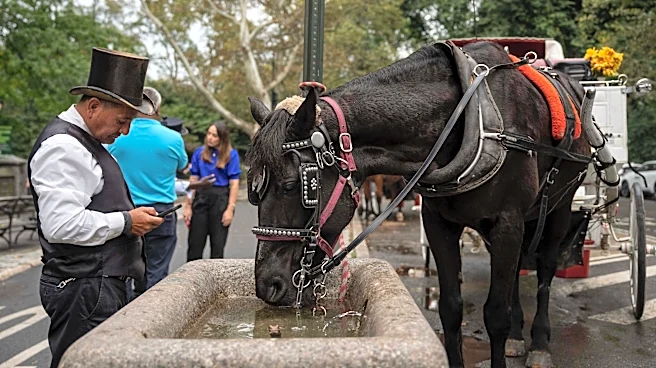
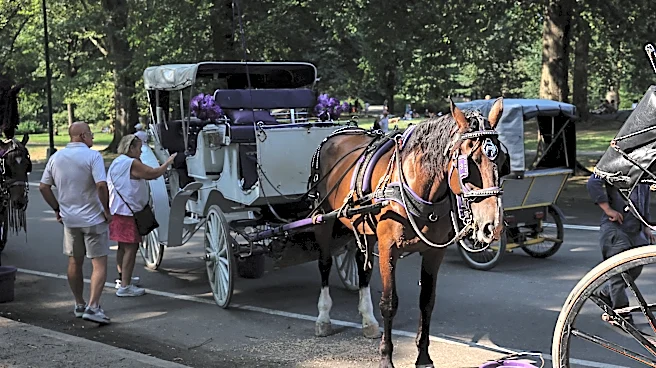
Mayor Zohran Kwame Mamdani has signed into law legislation that will end New York City’s horse-drawn carriage industry after 150 years. The new law, known as Romanch’s Law, mandates that horse-drawn carriages cease operations on city streets by June 1,
2028. This legislation was sponsored by Council Member Chris Marte and honors the memory of Romanch Mahajan, an 18-year-old who died following a horse-drawn carriage accident in Central Park on June 17, 2026. The administration has also outlined plans to support the approximately 200 individuals whose livelihoods are affected by this change, including medallion owners, carriage drivers, and stable hands. This support will involve medallion buybacks, workforce development, and career assistance programs. The Mayor's Office of Animal Welfare, led by Director Allie Taylor, confirmed that sanctuaries and rescue organizations are prepared to welcome the horses into retirement.
Why It's Important?
This legislation marks a significant shift in New York City's approach to animal welfare and public safety, concluding a debate that has spanned nearly two decades. The law prioritizes the safety of both the public and the horses, addressing concerns about the chaotic and overcrowded nature of city streets. The tragic death of Romanch Mahajan served as a catalyst for the bill's passage, highlighting the inherent risks associated with horse-drawn carriages in a modern urban environment. Furthermore, the city's commitment to supporting affected workers through financial aid and career transition programs underscores an effort to mitigate the economic impact on those dependent on the industry. This move could set a precedent for other major cities considering similar bans, reflecting evolving societal views on animal rights and urban safety.
What's Next?
The horse-drawn carriage industry in New York City will officially cease operations by June 1, 2028. In the interim, the Mamdani administration will implement its support plan for the approximately 200 affected workers. This plan includes facilitating medallion buybacks for owners and establishing a new Horse Carriage Worker Industry Program in partnership with NYC Talent and the NYC Department of Small Business Services (SBS). This program will offer career advisement, job training, entrepreneurship support, employer connections, educational opportunities, and tuition assistance. The administration also plans to engage with the TWU and horse carriage workers to integrate their feedback into the full transition plan, which is expected to be released by April 2027. Additionally, Mayor Mamdani will commission a feasibility study to explore electric carriages and electric pedal-assist bicycles as potential alternatives for use within Central Park and along its perimeter.
Beyond the Headlines
The decision to end New York City's horse-drawn carriage industry reflects a broader societal trend towards increased animal welfare advocacy and a re-evaluation of traditional practices within modern urban landscapes. This move highlights the tension between preserving historical traditions and adapting to contemporary ethical standards and safety concerns. The legislation also underscores the growing influence of public safety incidents, like the tragic death of Romanch Mahajan, in driving policy changes. The city's comprehensive approach to worker transition, including financial and career support, could serve as a model for other industries facing similar disruptions due to evolving regulations or technological advancements. This event may also spark renewed discussions in other cities about the ethical implications of using animals for tourism and the potential for more humane and sustainable alternatives.