


What's Happening?
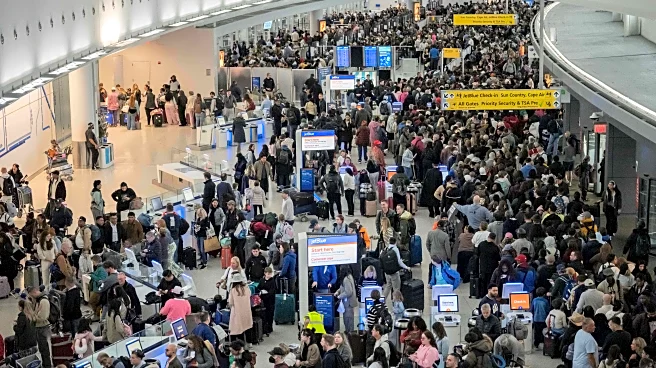
President Trump has announced the deployment of Immigration and Customs Enforcement (ICE) agents to airports across the United States to assist the Transportation Security Administration (TSA) amid staffing shortages. This move, overseen by border czar
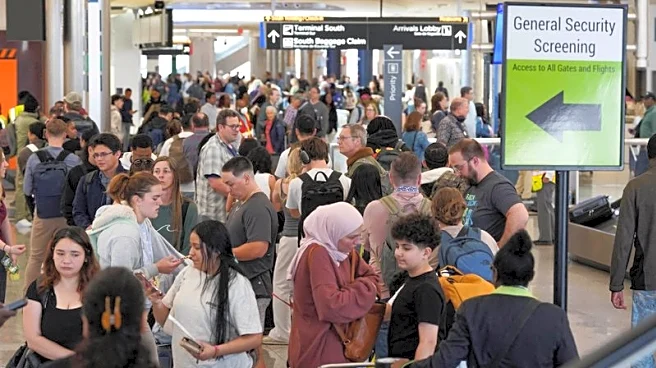
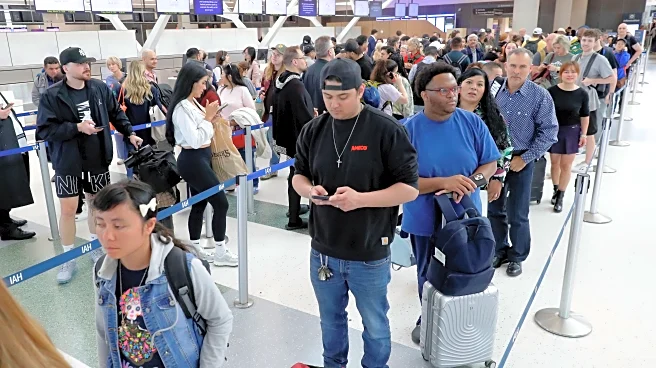
Tom Homan, aims to alleviate long security lines caused by TSA officers working without pay during a partial government shutdown. Homan stated that ICE agents would focus on non-specialized roles, such as guarding exits, to free up TSA officers for more critical tasks like operating scanning machines. The decision comes as lawmakers continue to negotiate funding for the Department of Homeland Security (DHS), with Democrats demanding changes to President Trump's immigration policies. The deployment has sparked controversy, with some officials and the TSA union expressing concerns over the safety and effectiveness of using ICE agents in aviation security roles.
Why It's Important?
The deployment of ICE agents to airports highlights the significant impact of the government shutdown on national security and public convenience. With TSA officers working without pay, the move aims to maintain airport security and reduce wait times, which have become a growing concern for travelers. However, the decision has drawn criticism from various stakeholders, including the TSA union, which argues that ICE agents lack the specialized training required for aviation security. This situation underscores the broader political struggle over immigration policy and funding for DHS, with potential implications for future negotiations and government operations. The outcome of these talks could affect the operational capacity of key security agencies and the travel experience for millions of Americans.
What's Next?
As negotiations continue, lawmakers are under pressure to reach a funding agreement for DHS before the Easter recess. The ongoing discussions involve contentious issues such as judicial warrants for immigration enforcement and the removal of masks by ICE agents, which are key Democratic demands. The resolution of these talks will determine the future of DHS operations and the deployment of ICE agents at airports. If a deal is not reached soon, the situation at airports could worsen, leading to increased travel disruptions and security concerns. The outcome will also influence the broader political landscape, potentially affecting future immigration policies and government shutdowns.