
What's Happening?
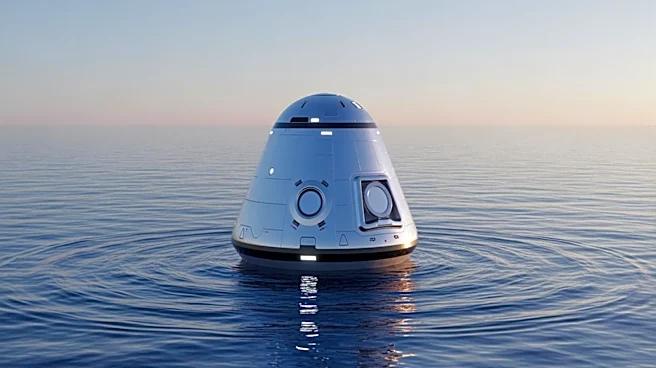
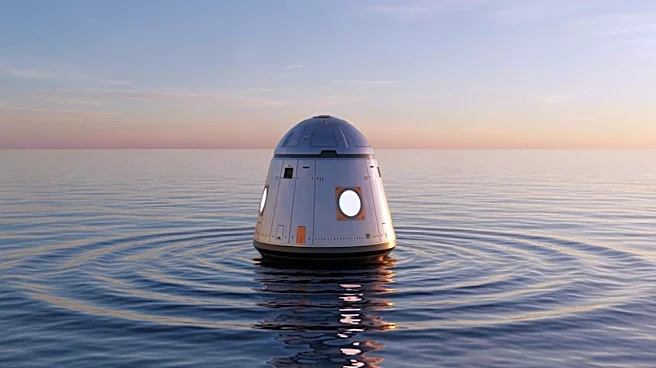
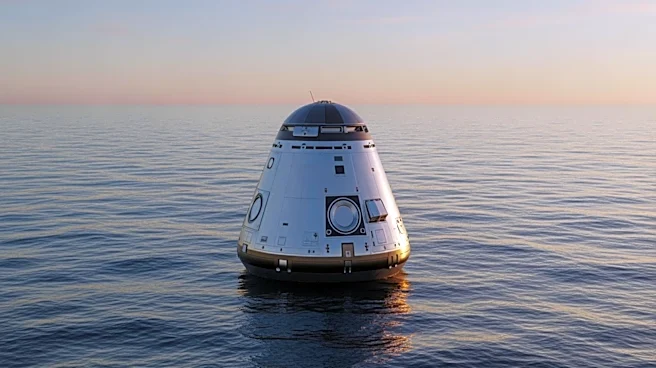
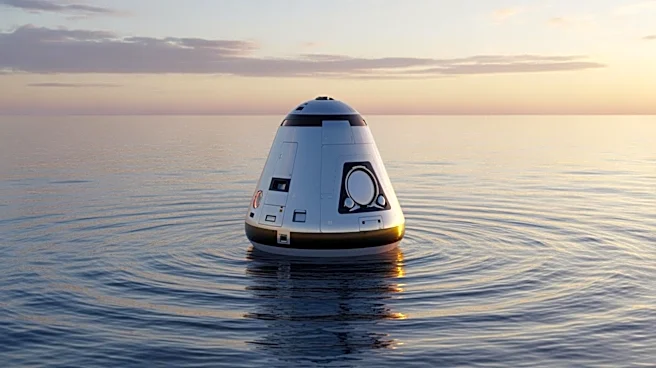
NASA's Artemis II mission marked a significant milestone as astronauts Christina Koch, Victor Glover, Jeremy Hansen, and Reid Wiseman were successfully airlifted from the ocean following their spacecraft's
splashdown. The astronauts were retrieved from an inflatable raft, known as the 'front porch,' and transported to a recovery ship for further evaluation. This operation was part of NASA's ongoing efforts to ensure the safety and success of its manned space missions. The recovery process was overseen by CBS News' Mark Strassmann, highlighting the meticulous planning and execution involved in such missions.
Why It's Important?
The successful recovery of the Artemis II astronauts underscores NASA's capability to conduct complex manned space missions, which are crucial for the future of space exploration. This mission is part of NASA's broader Artemis program, aimed at returning humans to the Moon and eventually reaching Mars. The safe retrieval of astronauts is a critical component of mission success, ensuring that future missions can proceed with confidence. This development also reinforces the United States' leadership in space exploration, potentially influencing international collaborations and investments in space technology.
What's Next?
Following the successful recovery, NASA will likely conduct a thorough evaluation of the mission to gather insights and improve future operations. The data collected from Artemis II will inform the planning and execution of subsequent missions, including Artemis III, which aims to land astronauts on the lunar surface. Stakeholders, including government agencies and private space companies, will be closely monitoring these developments to align their strategies with NASA's objectives.