






What's Happening?
Researchers from the University of Melbourne's Florey Institute of Neuroscience and Mental Health, La Trobe University, and other Australian institutions have found that a single dose of psilocybin increased social exploration in male mice exhibiting
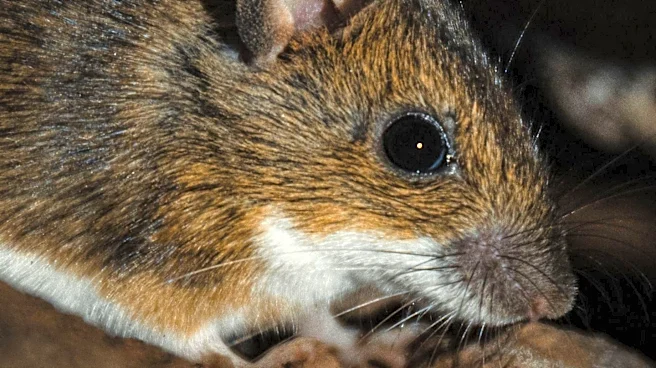
obsessive-compulsive disorder (OCD)-like behaviors. The study, published in Molecular Psychiatry, utilized a mouse model where the absence of the SAPAP3 gene is linked to compulsive-like grooming. Male SAPAP3 knockout mice, after receiving a single injection of psilocybin (1 milligram per kilogram of body weight), spent more time investigating an unfamiliar mouse and its chamber seven days later, compared to control mice given a saline solution. This effect was specific to male mice and was not observed in females. The study also noted increased neural activation in the medial prefrontal cortex and hippocampus in psilocybin-treated mice, regardless of genotype, with infralimbic c-Fos levels correlating with improved social recognition in male SAPAP3 knockout mice.
Why It's Important?
This research is significant because it explores a novel therapeutic avenue for OCD, a condition that often proves difficult to treat and can significantly impair social functioning. While psilocybin's potential for treating depression and substance use disorders has been widely investigated, its application in OCD has been less explored. The finding that a single dose can lead to enduring improvements in social cognition in an animal model of compulsive behavior suggests that psilocybin could potentially address an under-recognized clinical burden in OCD patients. The identification of specific brain regions, like the infralimbic prefrontal cortex, whose activation correlates with behavioral rescue, provides valuable insights into the neural mechanisms underlying psilocybin's effects. This could pave the way for developing targeted pharmacological treatments that modulate these pathways, offering hope for patients who do not respond to conventional therapies.
What's Next?
The current findings, while promising, are preliminary and based on a mouse model. The next steps involve further research to explore this effect in other animal models of OCD and to understand the underlying mechanisms more deeply. Crucially, future studies will need to investigate whether psilocybin can similarly affect social functioning in human patients diagnosed with OCD. This would involve carefully designed clinical trials to assess efficacy, safety, and optimal dosing. Given the male-specific effect observed in mice, future research should also explore potential sex differences in response to psilocybin treatment for OCD. If successful, these investigations could lead to the development of psilocybin-assisted therapies for OCD, potentially offering a new treatment option for a disorder with significant unmet needs.
Beyond the Headlines
This study contributes to the broader scientific and societal re-evaluation of psychedelic compounds for therapeutic purposes. For decades, psilocybin and similar substances were largely relegated to illicit use, hindering legitimate research. However, a growing body of evidence, including this study, is demonstrating their potential to address complex psychiatric conditions. The focus on social dysfunction in OCD is particularly insightful, as it highlights how mental health disorders can impact fundamental aspects of human interaction. If psilocybin can indeed improve social cognition, it could not only alleviate core OCD symptoms but also enhance the overall quality of life for patients by fostering better social integration. This research also underscores the importance of animal models in understanding complex human disorders and identifying potential treatments, even as it emphasizes the need for careful translation to human clinical applications.