



What's Happening?
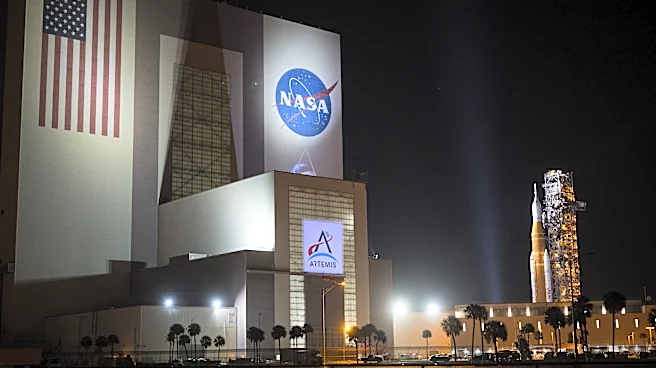
NASA has awarded five contracts to organizations for the development of the PHOtospheric Magnetograph Imager (PHOMI) as part of NOAA's Space Weather Next program. These contracts, each valued at approximately $900,000, are intended to advance the federal
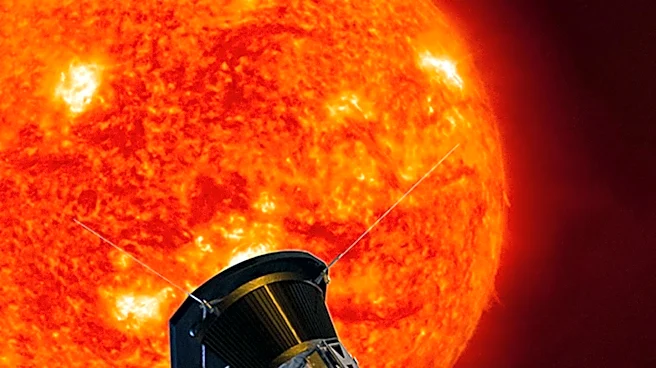
government's capabilities in operational space weather monitoring. The selected organizations will conduct studies to mature technologies, refine instrument concepts, and establish performance requirements for the PHOMI instrument. This initiative aims to improve solar magnetic field observations, which are crucial for forecasting space weather and predicting coronal mass ejections. The studies will evaluate mission requirements, develop instrument concepts, and assess potential performance and risks, providing a foundation for future competitive acquisition of the PHOMI instrument.
Why It's Important?
The development of the PHOMI instrument is a critical step in enhancing the United States' ability to monitor and forecast space weather, which can have significant impacts on satellite operations, communication systems, and power grids. Improved space weather forecasting capabilities are essential for mitigating the risks associated with solar storms and other space weather phenomena. By advancing the technology and understanding of solar magnetic fields, the PHOMI instrument will contribute to more accurate predictions and timely warnings, helping to protect infrastructure and maintain national security. This initiative underscores the importance of continued investment in space weather research and technology development.
What's Next?
Following the completion of the nine-month study contracts, NASA and NOAA will use the findings to establish performance requirements for the PHOMI instrument. This will pave the way for a future competitive acquisition process to develop and deliver the operational instrument. The successful implementation of the PHOMI instrument will enhance NOAA's Space Weather Next program, providing continuous monitoring of solar activity and improving the National Weather Service's ability to issue space weather alerts and forecasts. Stakeholders in the aerospace, telecommunications, and energy sectors will be particularly interested in the advancements and potential benefits of this program.