






What's Happening?
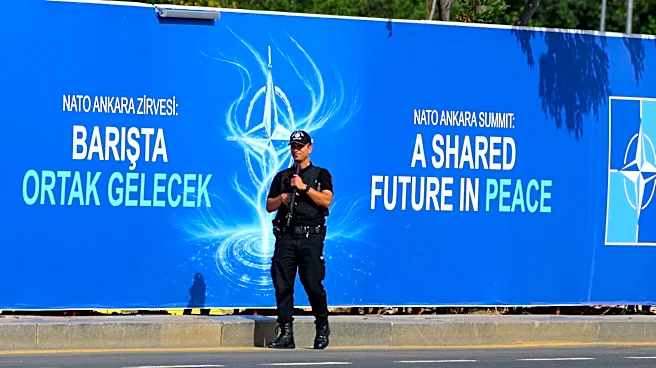
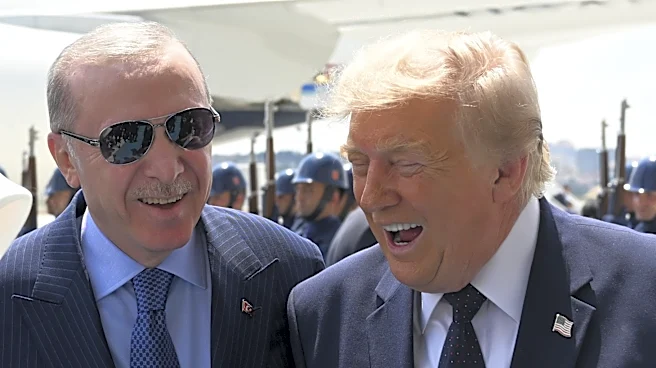
At the NATO summit in Ankara, Turkey, President Trump made a verbal slip by referring to Ukrainian President Volodymyr Zelensky as 'Putin' during a meeting. This incident occurred as Trump was addressing defense spending and military support for Ukraine
amid the ongoing Russia-Ukraine conflict. Additionally, Trump mistakenly referred to Japan as the 'Islamic Republic of Japan' in another comment. These remarks were captured in videos shared on social media, drawing attention to Trump's speaking style and raising questions about his cognitive abilities. The White House defended Trump's performance at the summit, emphasizing his leadership and the strengthening of NATO alliances.
Why It's Important?
Verbal missteps by political leaders can have significant implications, particularly in the context of international diplomacy. President Trump's comments could affect perceptions of U.S. leadership and its role in global affairs. Such incidents may also fuel debates about the president's fitness for office, especially given the ongoing scrutiny of his cognitive abilities. The summit's focus on defense spending and military support for Ukraine underscores the importance of clear communication in maintaining strong alliances and addressing global security challenges. These developments could influence public opinion and political discourse in the U.S.
Beyond the Headlines
The incident highlights broader concerns about the impact of verbal gaffes on international relations and the perception of U.S. leadership. It also raises questions about the role of media in shaping narratives around political figures. The scrutiny of President Trump's comments reflects ongoing debates about age and cognitive fitness in political leadership, a topic that has been prominent in discussions about both Trump and former President Biden. These issues may influence future electoral campaigns and the criteria by which political leaders are evaluated.