






What's Happening?
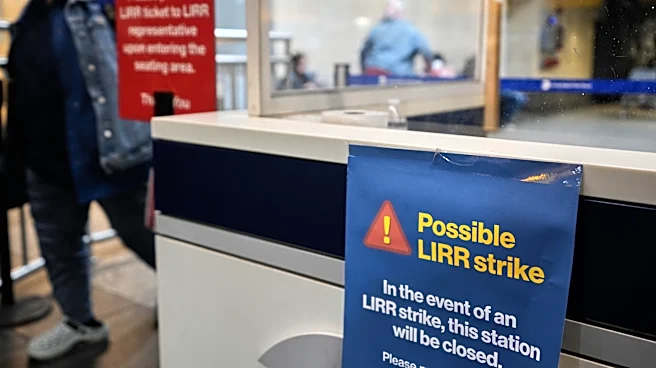
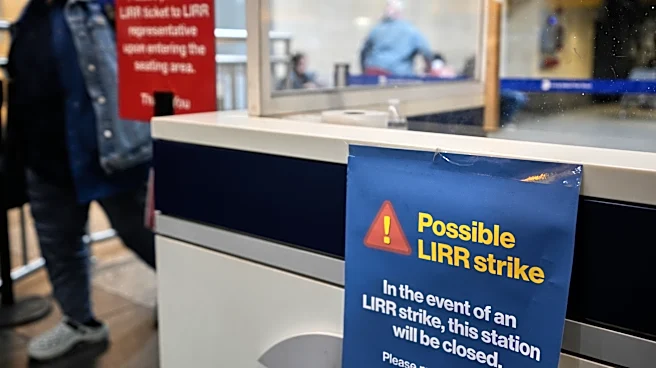
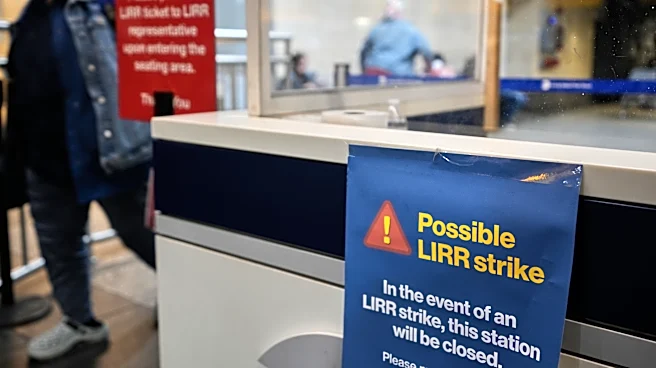
The Long Island Rail Road (LIRR), recognized as North America's busiest commuter rail system, has shut down due to a strike. This marks the first strike for the LIRR since 1994. The work stoppage has led to significant disruptions for commuters who rely
on the rail system for daily transportation. CBS News New York's John Dias reported on the strike, while Kristie Keleshian explored alternative transportation options available during this period. The strike has prompted commuters to seek other means of travel, including buses and carpooling, to navigate the transportation challenges posed by the shutdown.
Why It's Important?
The shutdown of the LIRR has substantial implications for commuters and the broader transportation network in the region. As North America's busiest commuter rail system, the LIRR plays a critical role in facilitating daily travel for thousands of individuals. The strike not only affects those directly using the rail service but also places additional pressure on alternative transportation methods, potentially leading to increased congestion and delays. The disruption highlights the importance of labor relations and negotiations in maintaining essential public services. Stakeholders, including commuters, businesses, and local governments, are impacted by the need to adapt to the sudden change in transportation availability.
What's Next?
The resolution of the strike will be a key focus for stakeholders, including the LIRR management and labor unions. Negotiations are likely to continue as both parties seek to reach an agreement that addresses the concerns of the workers while restoring service for commuters. In the meantime, commuters will need to rely on alternative transportation options, which may include increased use of buses, carpooling, and other forms of transit. The situation may also prompt discussions on improving contingency plans for future disruptions to ensure minimal impact on the transportation network.