



What's Happening?
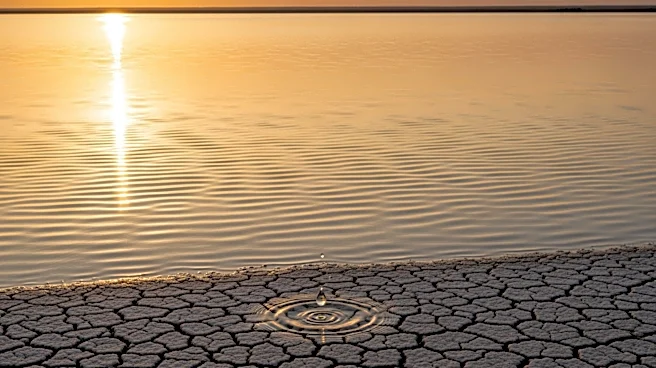
President Trump has proposed a $1 billion federal assistance plan aimed at addressing the environmental challenges faced by the Great Salt Lake in Utah. The lake has been shrinking due to water diversion for agricultural purposes and reduced precipitation,
exacerbated by climate change. Utah officials and supporters of the 2034 Winter Olympics are pushing for this plan to refill the lake, which is crucial for local wildlife habitats and the regional economy. The proposal seeks to acquire more water and implement measures to reverse the lake's decline, which has been ongoing for decades. The plan is seen as a significant step towards preserving the lake's ecological and economic importance.
Why It's Important?
The Great Salt Lake is a vital ecological and economic resource, serving as a habitat for migrating birds and supporting a thriving brine shrimp industry. Its decline poses risks to biodiversity and local economies dependent on these industries. The proposed federal assistance could help mitigate these risks by restoring water levels and addressing environmental concerns. This initiative highlights the broader impact of climate change and water management on regional ecosystems and economies. If successful, it could set a precedent for similar environmental restoration efforts across the U.S., emphasizing the need for sustainable water use practices.
What's Next?
The proposed plan requires Congressional approval, and its implementation will depend on securing the necessary funding and cooperation from local stakeholders. Utah officials and environmental groups are optimistic about the potential for collaboration between government, businesses, and residents to save the lake. Efforts may include voluntary water conservation measures by farmers and residents, as well as strategic investments in infrastructure to support the lake's restoration. The outcome of this initiative could influence future policy decisions regarding water management and environmental conservation in the region.
Beyond the Headlines
The shrinking of the Great Salt Lake is a symptom of broader environmental challenges, including climate change and unsustainable water use. Addressing these issues requires a comprehensive approach that considers the long-term impacts on local communities and ecosystems. The proposed plan could also spark discussions on the ethical implications of water management practices and the responsibility of different stakeholders in preserving natural resources. As the lake's restoration efforts progress, they may reveal deeper insights into the interconnectedness of environmental health and economic stability.