


What's Happening?
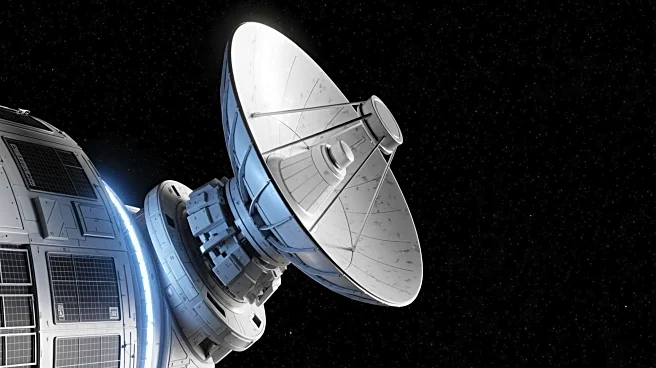
NASA's Neil Gehrels Swift Observatory, a 21-year-old spacecraft, is experiencing orbital decay and is currently non-operational. The observatory, which was launched in 2004 to detect gamma-ray bursts, is valued for its unique ability to quickly identify
and locate these powerful cosmic events. Despite its age, the observatory remains scientifically valuable, prompting NASA to consider a rescue mission. In September, NASA awarded Katalyst Space Technologies a $30 million contract to develop a commercial satellite aimed at stabilizing Swift's orbit. This mission represents a pioneering effort in commercial satellite servicing, as it seeks to extend the observatory's operational life without the high costs associated with flagship missions like Hubble.
Why It's Important?
The potential rescue of the Swift Observatory underscores the growing role of commercial entities in space operations, particularly in satellite servicing. This mission could set a precedent for future collaborations between NASA and private companies, offering a cost-effective alternative to traditional government-led space missions. The success of this mission could lead to broader adoption of commercial satellite servicing, potentially extending the life of other valuable but aging space assets. For the scientific community, maintaining Swift's capabilities is crucial, as it continues to provide unique data on gamma-ray bursts, contributing to our understanding of the universe.
What's Next?
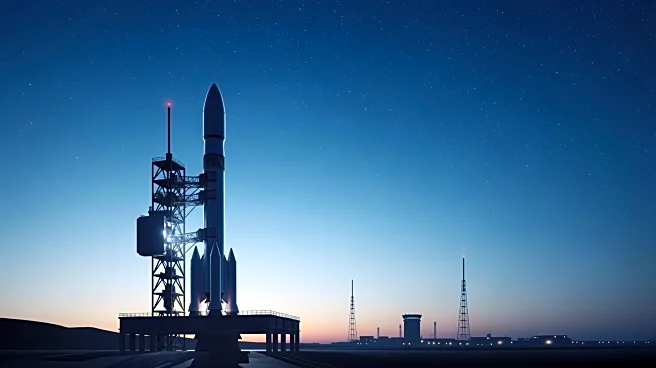
Katalyst Space Technologies is working against a tight deadline to launch the rescue mission by this summer. If successful, this mission could pave the way for similar initiatives, encouraging further investment in commercial space servicing technologies. The outcome will likely influence NASA's future strategies for managing aging satellites and could lead to increased reliance on private sector solutions for space infrastructure maintenance.