






What's Happening?
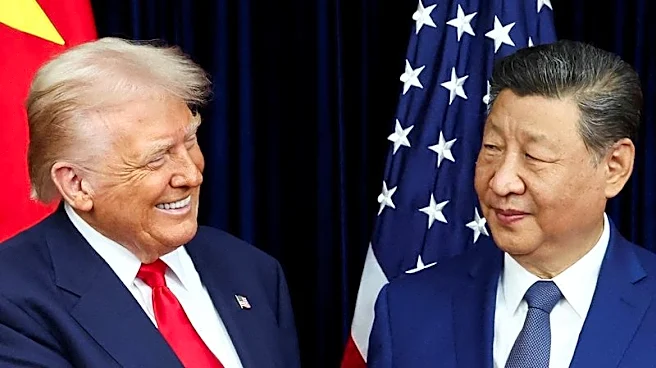
During a visit to Dublin, U.S. President Donald Trump expressed his desire to see Northern Ireland unify with Ireland, stating he would 'love' for it to happen and that it would be 'a fantastic thing' that would occur 'eventually.' These remarks were
made during a meeting with Irish Prime Minister Micheál Martin. President Trump acknowledged that the United Kingdom would have a say in the matter but reiterated his belief that it would be 'a very cool thing.' This stance breaks from the traditional neutral position maintained by previous U.S. presidents, including those with Irish heritage, regarding the constitutional status of Northern Ireland. The 1998 Good Friday Agreement, which the U.S. helped broker, stipulates that a referendum on unification can only be held at the discretion of the British government. President Trump's comments come weeks after British Prime Minister Andy Burnham stated that a referendum on Northern Ireland leaving the United Kingdom was 'off the table,' a position Downing Street confirmed remained unchanged.
Why It's Important?
President Trump's comments carry significant weight due to the U.S.'s historical role in the Northern Ireland peace process and its ongoing influence in international affairs. His departure from the long-standing U.S. policy of neutrality on Irish unification could be perceived as undermining the delicate balance established by the Good Friday Agreement. This agreement ended decades of violence between Irish nationalists and pro-British unionists, and maintaining its integrity is crucial for continued peace and stability in the region. The swift rejection from pro-British unionists, such as Gavin Robinson of the Democratic Unionist Party, highlights the sensitivity of the issue. Robinson emphasized that Northern Ireland's constitutional future is for its people to decide, not external commentary. While polls currently show a majority in Northern Ireland favor remaining in the U.K., the margin has narrowed since Brexit, making any external commentary on unification particularly impactful and potentially destabilizing.
What's Next?
President Trump's remarks are likely to continue to generate debate and discussion within Northern Ireland, the Republic of Ireland, and the United Kingdom. While the British government has reiterated its stance that a referendum on unification is not currently being considered, the comments could embolden Irish nationalists and further entrench the positions of pro-British unionists. The long-term impact on U.S.-U.K. relations, particularly concerning Northern Ireland, remains to be seen. Future U.S. administrations may choose to revert to a more neutral stance, but President Trump's public declaration has introduced a new dynamic into the conversation. The issue of Irish unification is deeply rooted in historical, cultural, and political identities, and any perceived external interference, especially from a major global power, can have unforeseen consequences on regional stability and political discourse.
Beyond the Headlines
President Trump's intervention in the Irish unification debate highlights the broader implications of U.S. presidential rhetoric on international relations and sensitive geopolitical issues. His comments, while perhaps intended to be supportive of a particular outcome, risk disrupting carefully constructed peace agreements and reigniting historical tensions. The Good Friday Agreement is a testament to diplomatic efforts to resolve deep-seated conflicts, and any perceived challenge to its framework can have far-reaching consequences beyond the immediate political sphere. This event also underscores the power of a U.S. president's words to influence public opinion and political movements in other nations, regardless of official policy. It raises questions about the role of external actors in self-determination processes and the potential for such interventions to either foster or hinder peace and stability. The incident serves as a reminder of the complex interplay between international diplomacy, national sovereignty, and the enduring legacies of historical conflicts.