





What's Happening?
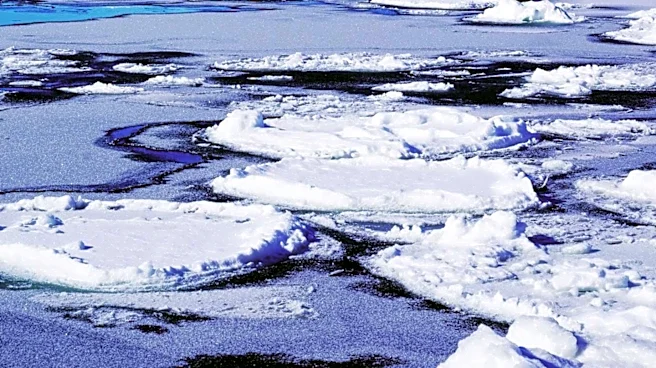
A recent experiment conducted in Cambridge Bay, Nunavut, Canada, has shown promising results in thickening Arctic sea ice by pumping seawater onto existing ice. This method, known as sea ice thickening, aims to enhance the ice's reflectivity and resilience
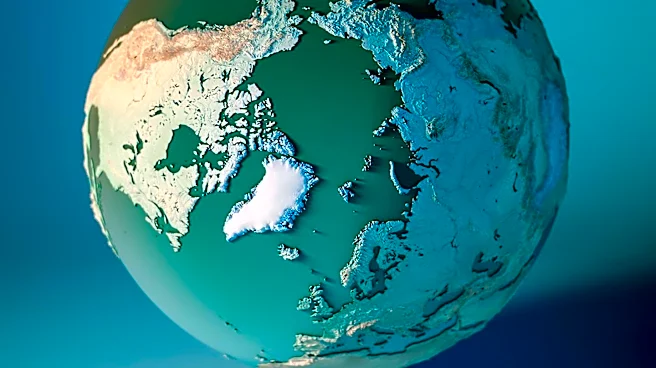
to melting. The experiment involved flooding test areas with seawater, resulting in ice that was up to 12.6 inches thicker than control sites. The technique, used by Nordic and Arctic communities for decades, could potentially slow permafrost thaw and reduce ice loss from Greenland. However, scalability and economic viability remain significant challenges, as large-scale deployment would require substantial resources and infrastructure.
Why It's Important?
The experiment's success highlights a potential climate adaptation tool for Arctic communities, offering a way to combat the rapid melting of sea ice due to global warming. Thicker ice could help mitigate coastal erosion, support wildlife, and facilitate travel in the region. However, the feasibility of implementing this method on a large scale is uncertain, given the logistical and financial constraints. The findings underscore the need for innovative solutions to address the impacts of climate change in the Arctic, which is experiencing significant environmental shifts with global implications.
What's Next?
Further research is needed to assess the long-term viability and ecological impacts of sea ice thickening. Researchers are exploring the use of underwater robotic technology to support autonomous deployments, which could enhance the method's scalability. The development of such technologies could pave the way for more effective climate adaptation strategies in the Arctic. However, the urgency of the situation requires immediate action, as the window for implementing large-scale interventions is narrowing with the ongoing loss of sea ice.