
What's Happening?
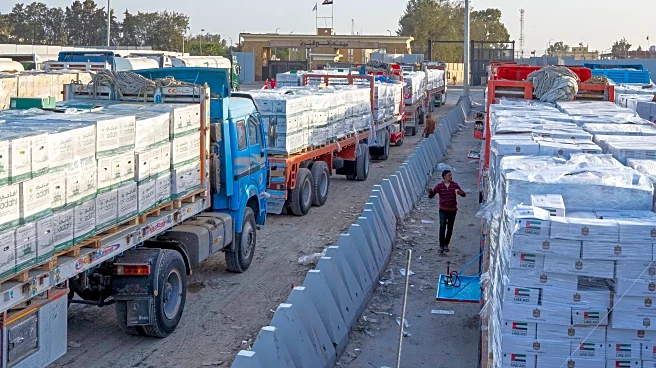
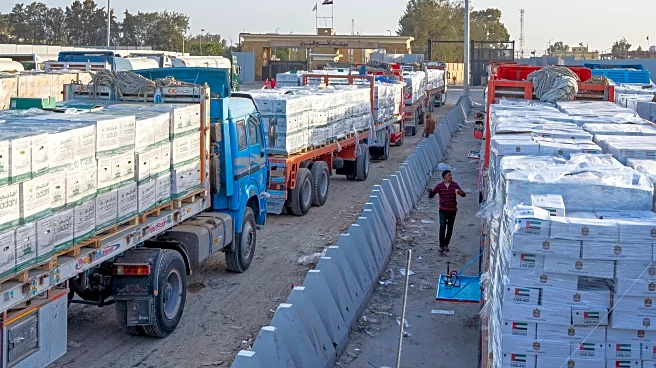
The Israel Defense Forces (IDF) announced the discovery of a significant cache of weapons, including approximately 110 mortar rounds and some rockets, concealed within United Nations Relief and Works Agency
(UNRWA) blankets and humanitarian aid in southern Gaza. This find, made by IDF Brigade 7 during routine patrols, is one of the largest seizures of long-range weapons since the October ceasefire. The discovery was made within Israeli-held territory east of the 'yellow line.' Since October 2025, Israel has maintained control over 53% of Gaza, while Hamas controls the remaining 47%, which includes the majority of Gaza's population. The IDF has been uncovering tunnels and hidden weapons throughout this period, but the scale of this find is unusual, as it involves mortars capable of reaching Israeli border towns.
Why It's Important?
The discovery of weapons hidden within UNRWA aid raises significant security concerns for Israel, as it highlights the potential misuse of humanitarian aid for military purposes by Hamas. This incident underscores the ongoing tension and security challenges in the region, particularly the threat posed by Hamas's ability to launch attacks on Israeli territory. The find also puts a spotlight on UNRWA's role and the challenges it faces in ensuring that its aid is not exploited for militant activities. This could lead to increased scrutiny and pressure on UNRWA from the international community, potentially affecting its operations and funding.
What's Next?
In response to this discovery, Israel may intensify its inspections of humanitarian aid entering Gaza to prevent further misuse. The international community, particularly countries that fund UNRWA, might demand stricter oversight and accountability measures to ensure that aid is not diverted for military purposes. This situation could also lead to diplomatic tensions between Israel and countries supporting UNRWA, as well as discussions on the future role and operations of the agency in conflict zones.
Beyond the Headlines
The incident raises broader ethical and legal questions about the use of humanitarian aid in conflict zones. It highlights the challenges faced by aid organizations in maintaining neutrality and ensuring that their resources are not co-opted by militant groups. This situation could lead to a reevaluation of how aid is delivered and monitored in conflict areas, potentially prompting changes in international aid policies and practices to prevent similar occurrences in the future.