






What's Happening?
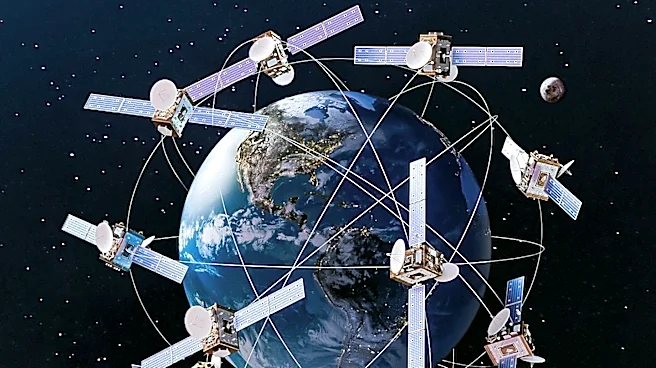
AT&T and AST SpaceMobile, supported by ground-based technology from Ericsson and Nokia, have achieved what they believe is the industry's first successful handoff between a ground-based cellular network and a direct-to-device satellite network. This milestone
occurred on October 21, 2026, outside Granite Falls, Washington. The achievement builds on previous successful voice calls, text messages, and video calls conducted through AST SpaceMobile’s BlueBird satellites using everyday smartphones. The primary challenge addressed in this latest test was to seamlessly transfer a connection between AT&T’s terrestrial wireless network and AST SpaceMobile’s satellite network, ensuring continuous service without interruption. Ericsson provided radio and core technology for intelligent network automation, while Nokia supplied radio access technology and mobility software for AST SpaceMobile’s space-based network.
Why It's Important?
This successful handoff is a critical step towards providing ubiquitous cellular broadband coverage, particularly in remote and hard-to-reach areas where traditional ground-based networks are limited or non-existent. For U.S. consumers, this means the potential for uninterrupted connectivity, regardless of location, enhancing safety and communication during travel or in emergencies. For first responders and essential workers, reliable communication in disaster-stricken areas becomes more feasible. The integration of terrestrial and satellite networks, with handoff times reduced from seconds to milliseconds, signifies a major advancement in telecommunications infrastructure. This development positions AT&T and AST SpaceMobile at the forefront of next-generation connectivity solutions, potentially expanding the reach and resilience of mobile networks across the U.S.
What's Next?
Following this successful handoff, the next phase for AT&T and AST SpaceMobile is expected to include beta services under real-world conditions. This will allow the companies to further refine the performance and integration of their combined networks. The broader objective is to progress towards commercial service, making cellular broadband coverage from space a seamless part of the everyday mobile network. This will involve extending connectivity farther and simplifying the user experience, ensuring customers remain connected without needing to actively manage their network connection. The continued collaboration with technology partners like Ericsson and Nokia will be crucial in optimizing the network for widespread commercial deployment.
Beyond the Headlines
The achievement of a seamless handoff between ground and satellite networks has profound implications for the future of global connectivity. It represents a significant leap towards a truly integrated communication ecosystem where geographical barriers to mobile service are virtually eliminated. This development could spur innovation in various sectors, including remote work, IoT applications in rural areas, and emergency services, by providing reliable, high-speed internet access everywhere. Furthermore, it highlights the increasing convergence of space technology and traditional telecommunications, potentially leading to new regulatory frameworks and business models. The ability to maintain continuous connectivity could also enhance national security and disaster preparedness, offering resilient communication channels when terrestrial infrastructure is compromised.