



What's Happening?
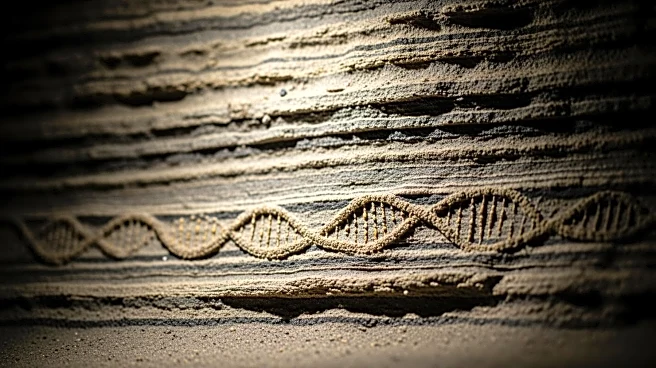
Recent research has unveiled a groundbreaking method of analyzing ancient DNA from cave sediments, providing new insights into Ice Age ecosystems. This technique allows scientists to reconstruct past environments and understand the relationships between
early humans, animals, and their surroundings. By extracting DNA from soil, researchers can identify species that lived in specific areas, track ecosystem evolution, and even detect species that left no physical evidence, such as fossils. This method has been applied to sediments from the Hohle Fels cave in Germany, revealing genetic traces of extinct species like mammoths and woolly rhinos. The findings offer a more nuanced understanding of how humans interacted with their environment during the Ice Age, potentially influencing animal behavior and vegetation.
Why It's Important?
The ability to analyze DNA from cave sediments represents a significant advancement in archaeological and ecological research. It provides a more comprehensive picture of Ice Age ecosystems, including species that did not leave behind fossils. This method enhances our understanding of biodiversity and ecological dynamics during a period of significant climate change. It also sheds light on human impact on the environment, offering clues about how early humans may have contributed to species extinction or ecosystem changes. This research could influence future studies on human migration patterns and interactions with the environment, providing valuable data for understanding historical biodiversity and climate adaptation.